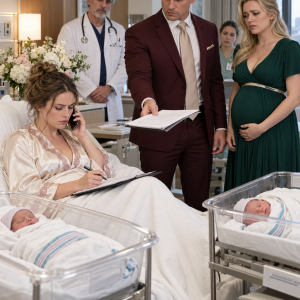
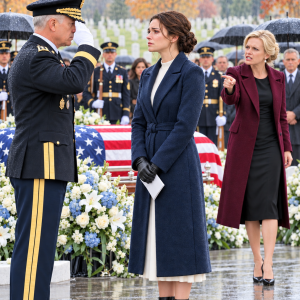
The paternity claim had been constructed through altered letters, false evidence, and Teresa Cross’s long resentment.
The emergency board meeting began that evening at Monroe headquarters.
Everett sat at the center, with Lillian and her attorney behind him. Malcolm occupied the seat to his right.
Sophie entered beside Catherine.
Everett had expected his daughter to choose blood. He had forgotten who had behaved like family.
Helen opened the meeting. Marcus presented millions in undisclosed payments to Lillian’s entities, privately purchased properties, pledged pension assets, and falsified vendor records.
Everett stood.
“The company faced extraordinary liquidity pressure. I made difficult decisions to preserve jobs and shareholder value.”
His explanation sounded reasonable, which made him dangerous.
“Catherine is not correcting governance,” he continued. “She is using an obsolete family agreement to seize a company during a divorce.”
Catherine opened her portfolio.
“You attempted to declare me incapable of managing my own affairs.”
“To prevent impulsive liquidation.”
“You submitted a forged declaration from Sophie.”
“I forged nothing.”
Sophie placed both hands on the table.
“Grandmother confessed.”
Everett looked toward Malcolm.
His father studied the table.
The alliance fractured.
Everett then argued that the rescue transfer could not proceed while Lillian’s inheritance claim remained unresolved.
Catherine gave him the laboratory report.
“The biological evidence was falsified.”
Every face turned toward Malcolm.
Everett read the first page.
“You submitted your own hair?”
Malcolm’s voice was rough.
“I needed time.”
Lillian stood abruptly.
“You told me Harold North was my father.”
“Your mother believed many things when she required money.”
“You showed me letters.”
Marcus answered.
“The letters were edited.”
Lillian turned toward Everett.
“Did you know?”
He waited too long.
“I knew the evidence was uncertain.”
“You told me Northstar belonged to me.”
Everett stepped closer.
“This is not the moment to become emotional.”
Lillian laughed sharply.
“You taught me that sentence.”
Catherine recognized the stillness entering Lillian’s face. It was the moment humiliation became evidence. Everett had always intended to blame her if the plan failed.
Catherine placed the Evelyn North Patent Trust on the table.
She explained that her mother created the ceramic membrane responsible for nearly two-thirds of Monroe’s operating earnings. The license terminated if Monroe executives committed fraud against Evelyn’s heirs.
Everett read the clause.
“You cannot destroy this company because of a marital dispute.”
“Forging evidence of an heir’s incapacity is specifically listed as grounds for termination.”
The board had two options.
Northstar could revoke the license and force Monroe toward collapse, or it could enforce the rescue agreement, remove responsible executives, protect the pension fund, and preserve the operating business under independent oversight.
Catherine selected the second path.
“Employees will not lose retirement savings because executives treated them as collateral,” she said. “The company will survive, but it will not remain a family throne.”
The directors voted to suspend Everett and Malcolm, recognize Northstar’s controlling shares, and appoint an independent restructuring committee.
Lillian surrendered corporate devices and offered cooperation.
Consequences would come through evidence rather than spectacle.
Part 5 – The Cost of Calling Fear Loyalty

Federal investigators eventually charged Malcolm and Everett with pension-related fraud, falsification of financial records, obstruction, and conspiracy involving the fabricated incapacity petition.
Malcolm entered a cooperation agreement after admitting that he altered the paternity evidence to delay the share transfer.
Everett fought every allegation, blaming Catherine, Lillian, Malcolm, the board, and financial pressure. Responsibility remained the only asset he distributed generously.
Lillian admitted signing false invoices, accepting corporate property, and participating in the plan to transfer voting interests. She also provided messages proving Everett knew the paternity evidence was unreliable and intended to blame her if regulators intervened.
Her cooperation reduced her sentence but did not erase it.
Judith pleaded guilty to impersonation and signature forgery. Because she confessed, cooperated, and had no prior record, she received probation, restitution, and community service.
Sophie did not forgive her immediately.
Catherine did not demand that she try.
Judith moved into a modest apartment and began attending legal-literacy workshops operated by Catherine’s foundation. Months later, she spoke publicly about how fear can become complicity when people protect institutions rather than the people being harmed.
She never used the lesson to excuse herself.
That distinction eventually persuaded Sophie to meet her for coffee.
The divorce lasted nine months.
Everett claimed the Northstar shares were marital property, the hotel recording violated privacy, the rescue agreement was predatory, and the affair began after the marriage had emotionally ended.
The court rejected those arguments. The rescue agreement predated the marriage, Catherine’s inheritance remained separate, and Everett’s misconduct triggered the transfer.
Catherine restored her maiden name.
Catherine Elizabeth North.
She did not liquidate Monroe Advanced Materials.
Instead, she placed the controlling shares into an employee-benefit trust with independent governance. Sophie accepted a nonexecutive role overseeing pension protection and community reporting, not because Catherine owed her a reward, but because Sophie understood that family loyalty should protect vulnerable people rather than powerful surnames.
The company was renamed Meridian Applied Materials, separating its future from the Monroe dynasty.
A restored history display inside headquarters finally credited Dr. Evelyn North as the inventor of the ceramic membrane that built its aerospace division.
Catherine stood before her mother’s photograph during the unveiling.
For decades, men had called Evelyn’s invention company property while treating her recognition as an emotional demand. Catherine understood that the pattern continued because women were often required to provide value quietly, then criticized when they asked who benefited from it.
Part 6 – The Room Without a Disposable Chair
One year after the dinner at the Bellweather, Catherine reopened the hotel’s ground-floor restaurant as a nonprofit meeting space called The Open Table.
The program provided free legal clinics, financial-planning workshops, and professional gatherings for women rebuilding their lives after divorce, widowhood, employment discrimination, or financial coercion.
The room contained circular tables without assigned head seats.
There were no special entrances for donors and no downstairs area for people considered less important. Executives, attorneys, caregivers, retirees, and service workers shared the same coffee and meals.
Rachel attended the opening beside Sophie.
Judith sat quietly near the back, participating only after Catherine invited her.
Samuel Ortiz approached with a small frame.
Inside rested the original TEMPORARY WIFE place card.
Catherine looked at it for several seconds.
“I thought this remained in the legal archive.”
“The evidence hold ended last month,” Samuel said. “I wondered whether you wanted it returned.”
Catherine considered destroying it.
Instead, she placed the card inside a wall display beside a short explanation of why The Open Table existed.
A woman’s name cannot be replaced with a role assigned by someone who benefits from her silence.
At the bottom, Catherine added another sentence.
No seat in this room depends upon marital status, wealth, age, usefulness, or permission.
During the opening program, a young widow asked whether justice felt like taking Everett’s chair at the dinner.
Catherine looked around the room.
Women sat together reviewing contracts, comparing retirement options, and speaking openly without waiting for approval from any family patriarch.
“At first, I believed justice would feel like occupying the seat he claimed belonged to him,” Catherine said. “It did not.”
She touched the edge of the circular table.
“Justice felt like building a room where nobody had to humiliate herself before receiving a place.”
Sophie stood beside her afterward.
“Do you regret not destroying Monroe?”
“The company was never the person who harmed me.”
“Dad believed it belonged to him.”
“That belief was the problem. Institutions become dangerous when families treat employees, inventions, and retirement funds as private extensions of their identity.”
Sophie nodded.
Everett later sent a letter from prison requesting forgiveness. He wrote that fear of failure had consumed him and that he believed control was the only way to protect what his family built.
Catherine returned the letter unread.
Understanding his explanation was no longer necessary for understanding her own life.
That evening, after the final guests departed, she walked through the Bellweather’s lobby. The brass doors reflected the café, the round tables, and the last volunteers stacking informational folders.
One year earlier, Lillian believed changing a place card could erase Catherine’s position. Everett believed a medical petition could erase her authority. Malcolm believed altered evidence could delay the truth until records disappeared. Judith believed silence could preserve a family after its values had already collapsed.
Each of them had treated identity as something powerful people could rename.
Catherine knew differently now.
A marriage could end. A surname could change. A board position could disappear. None of those events reduced a person to the label waiting at her plate.
She switched off the final light and looked through the glass doors toward the rainy Seattle street.
Taking Everett’s chair had been satisfying for one evening.
Building a room without disposable women would matter much longer.
THE END