Part 1: The Woman at the Back Table
The evening my former husband told me I had wasted my potential, I was sitting near the service entrance of a wedding reception, wearing a navy dress I had bought on clearance and wondering whether my seven-year-old daughter would still be awake when I got home.
I had spent most of the afternoon helping my younger sister, Caroline, prepare for her wedding at a restored historic hotel in Philadelphia, fastening the tiny buttons on her gown, finding a missing earring, and reassuring her that the flowers were beautiful even though the florist had delivered the wrong shade of pink. By the time the reception began, I was exhausted, but I was happy for her, and I had every intention of enjoying the evening.
Then I saw my former husband, Andrew Whitcomb, standing beside his pregnant wife, who also happened to be my cousin.
Andrew had left our marriage shortly after I told him we were expecting a baby, explaining that he wasn’t ready for the responsibilities of a family. Within a year, he was dating my cousin, Rebecca, and before our daughter started kindergarten, they were married.
I had learned to live with the complicated family gatherings, the awkward introductions, and the quiet expectation that I should make everyone comfortable by pretending the past had been resolved.
What I had never learned was how to make Andrew’s occasional cruelty feel ordinary.
He approached my table shortly after dinner, carrying a drink and wearing the confident expression I remembered from the early years of our marriage.
“You look tired, Natalie,” he said.
“It’s been a long week.”
“Still working those evening shifts?”
I nodded. “When I need to.”
He glanced at my dress, then toward the table where Rebecca sat talking with my mother.
“You know, you were supposed to become an architect. You had everything lined up, and now you’re managing maintenance schedules at a school district and raising a child in a little apartment.”
I looked at him, surprised that after all these years he could still speak as though my life were a disappointing investment.
“I’m a facilities coordinator, Andrew. I like my work.”
“I’m sure you do, but it’s hardly what you planned.”
“A lot of things aren’t.”
He gave a small shrug.
“Rebecca understood that you can’t build a future by constantly making sacrifices.”
I could have reminded him who had made the sacrifices that allowed him to walk away, who had attended parent-teacher conferences alone, and who had spent countless evenings balancing utility bills against grocery receipts while our daughter slept in the next room.
Instead, I said, “Please go back to your wife. This is Caroline’s wedding.”
His expression hardened briefly before he turned away.
Across the room, Rebecca watched him return, resting one hand against her growing stomach. When our eyes met, she offered a faint smile that I couldn’t quite understand.
I lowered my gaze to the untouched dessert in front of me.
My daughter, Emma, had wanted to attend the wedding more than anything. She had even chosen a secondhand lavender dress because it matched the ribbon on Caroline’s invitation, but my mother had persuaded my sister that the reception would be more enjoyable without young children.
I had promised Emma a slice of chocolate cake instead.
As I reached for my purse to find the small bakery box I had requested earlier, a man’s voice interrupted my thoughts.
“Would you do me an unusual favor?”
I looked up.
The stranger standing beside my chair was tall, with dark blond hair beginning to silver at the temples, an open expression, and the slightly uncomfortable posture of someone who was accustomed to formal occasions without particularly enjoying them.
“That depends on the favor,” I answered.
He smiled.
“Would you pretend we’re married long enough to dance with me?”
For the first time that evening, I forgot about Andrew entirely.
Part 2: A Marriage That Lasted One Evening
I stared at the stranger for several seconds, trying to decide whether he was joking.
“You usually introduce yourself before proposing marriage,” I said.
“Fair point. I’m Benjamin Prescott.”
The name sounded vaguely familiar, although I couldn’t immediately place it.
“Natalie Foster.”
“I know. Your new brother-in-law introduced us briefly during the rehearsal yesterday, but I don’t think you remember.”
I searched my memory and recalled a man standing near the entrance while Caroline’s fiancé discussed the wedding arrangements.
“You work with Michael?”
“Occasionally. We serve on the board of a neighborhood housing nonprofit.”
He glanced toward an older woman near the windows.
“My aunt has spent the entire evening encouraging me to settle down with the daughter of an old family friend. She’s convinced we’re perfectly suited, although neither of us agrees.”
“And your solution is to invent a wife?”
“It seemed more practical before I said it aloud.”
I laughed despite myself.
Benjamin looked relieved.
“There it is. I was hoping you’d smile.”
His words were gentle rather than flirtatious, and I found myself wondering how long he had been watching me.
“Why ask me?”
He hesitated before answering.
“Because I saw what happened at your table, and because Michael told me you’ve spent years taking care of everyone else. I thought perhaps someone ought to ask whether you wanted a pleasant evening.”
I looked toward Andrew, who was still watching from across the room.
Then I looked at Benjamin’s outstretched hand.
“One dance,” I said.
“One dance.”
He led me onto the floor as the band began playing an old love song, and although I was initially conscious of every curious glance, I gradually relaxed when I realized he wasn’t trying to impress anyone.
We talked about ordinary things, including the difficulty of keeping houseplants alive, the strange expense of parking in Philadelphia, and Emma’s determination to become a veterinarian despite being afraid of our neighbor’s enormous golden retriever.
By the time the music ended, I had laughed more than I had in weeks.
Unfortunately, Benjamin’s aunt chose that moment to approach us.
“Benjamin, aren’t you going to introduce me?”
She was an elegant woman in her seventies, wearing a pearl necklace and the expression of someone who expected truthful answers.
Benjamin glanced at me.
I could have stopped him.
Instead, perhaps because I was tired of being treated as someone whose life required explanation, I squeezed his hand.
“Aunt Margaret, this is Natalie,” he said. “My wife.”
The older woman blinked.
“Your wife?”
“We married privately last month.”
I nearly laughed at the confidence with which he delivered this entirely fictional information.
Margaret studied us both.
“And you neglected to tell your family?”
Before Benjamin could answer, Caroline appeared beside us, still wearing her wedding gown.
She looked from Benjamin to me, then toward Andrew, who had begun approaching.
Something in her expression changed.
“Oh, Natalie,” she said warmly, slipping an arm around my shoulders. “I was wondering when you two would finally tell everyone.”
I stared at her.
My sister smiled as though she had been waiting months to share our imaginary secret.
Within minutes, the story had acquired witnesses, a wedding date, and enough confusing details that I began to wonder whether we would need an attorney to end it.
Andrew arrived just in time to hear Margaret congratulating us.
“You got married?” he asked.
I looked at him calmly.
“Apparently, yes.”
Benjamin coughed into his hand.
Caroline turned away to hide her smile.
For the first time in years, Andrew seemed unable to find a remark that would make me feel smaller.
Yet what stayed with me afterward wasn’t his expression. It was the unfamiliar sensation of standing among people who were willing to support me without first asking whether I had earned it.
Later, Benjamin and I stepped onto a quiet terrace overlooking the city.
“We should tell your aunt the truth tomorrow,” I said.
“Absolutely.”
“And my sister.”
“I suspect your sister already knows considerably more than she’s admitting.”
I smiled, but then my expression grew serious.
“Why did you really come over to my table?”
Benjamin rested his hands on the railing.
“Michael told me you helped Caroline through college when your parents were struggling financially, and that you rearranged your work schedule for months when your daughter needed extra support at school.”
I looked away.
“That’s just what family does.”
Related Posts
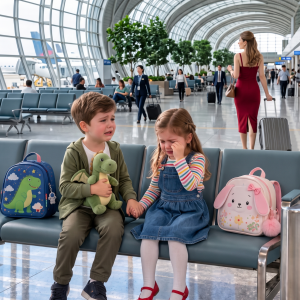
“Your Father Is Gone, and I’m Not Wasting Another Day Raising You Two Brats!” A Woman Snapped at Her Late Husband’s 5-Year-Old Twins Before Leaving Them Alone at Chicago O’Hare Airport. She Was Their Stepmother—and She Walked Onto Her Flight Without Even Saying Goodbye. I Was an Army Colonel Who Had Served With Their Army Captain Father. I Called Airport Security, but When the Little Girl Recognized Me, She Clutched Her Teddy Bear and Whispered, “Daddy Told Us to Find You.” Then She Pointed at Her Stepmother’s Suitcase. “She Took the Blue Folder Daddy Left for You.”
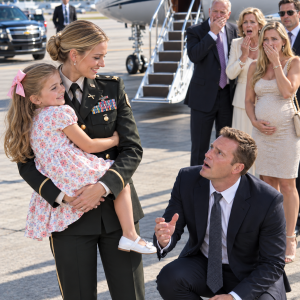
Five Minutes After Our Divorce, My Husband Said, “Take Our Two Daughters. I Finally Have a Son Coming.” He Had No Idea I Was a U.S. Army Colonel. Four Hours Later, He Was Begging Me Not to Leave—Because a Shocking Secret About His Unborn “Heir” Had Just Turned His Entire Family Upside Down
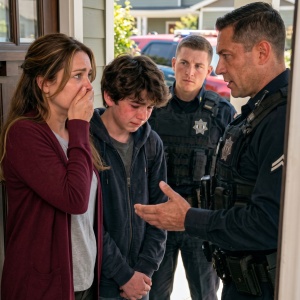
“Mom, I Sold My $1,200 Guitar to Buy Elena a Wheelchair. Please Don’t Be Mad,” My 13-Year-Old Son Whispered, Hiding His Injured Arm Behind His Back. I Thought He’d Simply Made a Heartbreaking Sacrifice for a Disabled Classmate—Until Two Police Officers Knocked on Our Door the Next Morning. One Held Up a Clear Evidence Bag Containing a Twisted Piece of Metal. My Son Went Pale. Then the Officer Asked, “Ma’am, Have You Seen the Security Footage From Tuesday?”
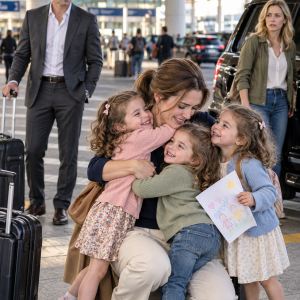
Five Years After Our Divorce, My Wealthy Ex Still Thought I Had Left Him With Nothing—Until Three 4-Year-Old Girls Ran Into My Arms at the Airport Calling “Mommy.” He Looked at Their Faces, Asked Their Ages, and Began Counting Backward… But the Secret Hidden in His Own Family Went Much Deeper Than Either of Us Knew