The Morning I Learned What Family Really Meant

The first thing I remember about waking up in the hospital was the uncomfortable brightness of the room, followed by a persistent ache at the back of my head that seemed to intensify whenever I tried to move. Somewhere beside me, a machine was making a gentle, rhythmic sound, and beyond the partially drawn curtains, I could hear nurses speaking quietly to one another.
For several seconds, I couldn’t remember where I was or how I had gotten there, but then an image of my five-year-old daughter, dressed in her favorite pink ballet outfit, came rushing back into my mind, followed by memories so disturbing that I immediately tried to sit up.
A nurse hurried toward my bed and placed a reassuring hand on my shoulder.
“Mrs. Bennett, I need you to stay still. You’ve suffered a serious concussion, and your body needs time to recover.”
I barely heard her explanation because the only thing I could think about was my daughter, Sophie, and the last terrible moments I remembered before everything had gone dark.
“Where’s my little girl? Please tell me where she is.”
The nurse hesitated before pulling a chair closer to my bedside.
“Your daughter is with our pediatric surgical team. They’re doing everything they can to help her.”
The word surgery seemed to hang between us, and I felt an overwhelming sense of helplessness as I remembered Sophie’s frightened voice calling for me.
Against the nurse’s advice, I insisted on seeing my husband, and eventually, with assistance, I was taken into the surgical waiting area, where I found Matthew sitting beneath a large window overlooking the quiet streets of Columbus, Ohio.
My husband was an architectural designer, a thoughtful, even-tempered man who rarely raised his voice and had always believed that most disagreements could be resolved through patience and honest conversation. During our eleven years of marriage, I had seen him disappointed, exhausted, and occasionally frustrated, but I had never seen him look the way he did that morning.
His clothes were wrinkled, his eyes were swollen from crying, and his hands were clasped so tightly that his fingers had turned pale.
The moment he saw me, he stood and hurried forward, wrapping his arms around me with extraordinary gentleness.
“Rebecca, sweetheart, you should still be resting.”
I held onto him, struggling to find enough courage to ask the question that had been consuming me.
“Matthew, what happened to her legs?”
He lowered his head, and for a moment, I thought he might not be able to answer.
“Both of her legs are seriously injured. The doctors are working to repair the fractures, but they won’t know how much mobility she’ll recover until she’s had time to heal.”
His voice faltered as he continued.
“They told me these injuries couldn’t have happened from an ordinary fall.”
I closed my eyes, wishing desperately that I could return to the previous morning, when my greatest concern had been whether Sophie would spill strawberry jam on her ballet skirt before we left for my parents’ house.
What should have been an ordinary Sunday afternoon had become the moment that changed our family forever.
And the people responsible were the very people I had spent my entire life calling home.
A Sunday Invitation I Wish I Had Declined
My parents, Richard and Margaret Caldwell, lived in a spacious colonial-style house in a comfortable neighborhood outside Columbus, where carefully maintained gardens and neatly painted front porches gave the impression that nothing particularly unpleasant could happen behind closed doors.
My father owned a successful commercial landscaping company, while my mother devoted much of her time to charitable organizations, church committees, and maintaining the family’s reputation within the community.
My older sister, Patricia, was a senior financial consultant whose professional accomplishments had always been a source of enormous pride for our parents.
Growing up, I had become accustomed to Patricia receiving the greater share of their attention, although I had never imagined that their favoritism would eventually extend to our children in such a disturbing way.
The previous October, Patricia’s twelve-year-old daughter, Natalie, had been seriously injured in a traffic accident. Before the accident, she had been an enthusiastic competitive gymnast who spent most of her free time practicing routines and dreaming about participating in national competitions.
Adjusting to life in a wheelchair had been extraordinarily difficult for her, and although Matthew and I understood that her frustration sometimes emerged as anger, we had tried to support her without making her feel that her circumstances defined her worth.
We visited regularly, brought books and activities, helped with transportation, and contributed $10,000 toward expenses that weren’t covered by insurance.
However, Patricia had recently discovered a rehabilitation program in Switzerland that she believed could dramatically improve Natalie’s condition, and she expected Matthew and me to contribute a substantial portion of our savings.
When we explained that we couldn’t afford what she was requesting, particularly while paying our mortgage and saving for Sophie’s education, the atmosphere within our extended family began to change.
My mother suggested that we were being selfish, my father stopped returning Matthew’s calls, and Patricia made increasingly unpleasant remarks whenever Sophie talked about her ballet lessons.
Nevertheless, when my mother invited us to Sunday lunch, I convinced myself that perhaps everyone was finally ready to put those disagreements behind us.
Matthew had an appointment with a client that afternoon, so Sophie and I went alone.
She was wearing a pale pink ballet skirt over her little dance outfit because she had just attended a special weekend practice, and she couldn’t wait to show Natalie the new steps she had learned.
As soon as we entered the house, Sophie hurried toward her cousin, smiling with the uncomplicated enthusiasm that only a five-year-old can possess.
“Natalie, guess what! My teacher says I’m getting really good at turning around without falling!”
She demonstrated a small, imperfect twirl, nearly losing her balance before laughing at herself.
Natalie didn’t smile.
I noticed her expression but assumed she was having a difficult afternoon, so I encouraged Sophie to put away her dance bag before joining me in the kitchen.
A little later, while I was preparing lemonade, Sophie approached Natalie’s wheelchair and offered to help her reach the patio.
“We can pretend you’re a princess, and I’ll push your carriage through the garden.”
What followed was a sudden outburst of emotion that brought me running from the kitchen.
Natalie was crying uncontrollably, telling everyone how unfair it was that Sophie could dance while she couldn’t even stand without assistance.
“Why does she get to do everything I used to do? Everybody keeps telling me to be happy for her, but I don’t want to be happy for her!”
Her frustration grew until she said something that left the entire room silent.
“If I can’t walk anymore, then she shouldn’t be able to walk either!”
I expected Patricia to comfort her daughter while gently explaining that another child’s happiness wasn’t responsible for her difficulties.
Instead, my mother moved beside Natalie and began stroking her hair.
“I know, darling. You’ve had to give up so much, and nobody seems willing to make things fair for you.”
Something about her response made me deeply uncomfortable, particularly when Patricia turned toward Sophie with an expression that contained none of the affection an aunt should have for her niece.
“Maybe your mother should think about how much those dancing lessons cost while Natalie is waiting for treatment.”
I stepped forward immediately.
“Patricia, this has nothing to do with Sophie. She’s five years old, and she was only trying to make Natalie smile.”
My sister began arguing about the money again, accusing Matthew and me of valuing our comfortable lifestyle more than Natalie’s future.
I reminded her of the financial assistance we had already provided, but before I could finish speaking, my father appeared in the doorway leading to the garage.
There was something deeply unsettling about his expression, and when he began speaking about teaching our family to share Natalie’s difficulties, I realized that the situation had become far more serious than an ordinary disagreement.
I reached for Sophie and told her we were leaving.
Patricia stepped between us.
“You’re not walking away from this conversation again, Rebecca.”
“Move away from my daughter. We’re leaving, and if you try to stop us, I’m calling the authorities.”
Everything happened so quickly afterward that even now, when I try to remember it, the afternoon returns to me in incomplete fragments.
I remember trying to reach Sophie, my sister physically preventing me from doing so, and a sudden impact that left me unable to remain conscious.
When I finally opened my eyes, the house had become strangely quiet.
Sophie was lying near the entrance to the garage, crying softly, and the condition of her legs made it immediately clear that she needed emergency medical attention.
I tried to move toward her, but my father stood nearby, looking down at me without any visible concern.
“Take your daughter and leave. Tell the doctors she had an accident at the park. If you tell them anything else, we’ll explain that you’re the one responsible, and there are three of us who can confirm it.”
I could hardly believe that the man speaking to me was the same person who had once taught me to ride a bicycle.
With trembling hands, I reached for my phone and called Matthew.
“Please come. Something terrible has happened to Sophie. I need you.”
Related Posts
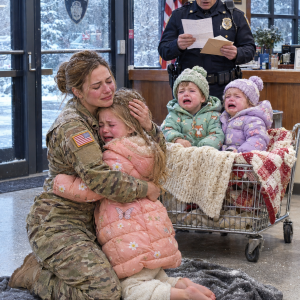
At 3:20 A.M., a Sergeant Called: “Your 9-Year-Old Daughter Just Walked Five Miles Through a Blizzard, Pushing a Shopping Cart With Two Toddlers Inside.” When I Arrived, She Clung to Me and Whispered, “Mom, I Tried to Tell You, but Nobody Would Listen.” Then She Pulled a Soaked Envelope From Her Shoe. The Sergeant Recognized the Photographs of Two Brothers Who Had Vanished 14 Months Earlier, Immediately Locked the Station Doors, and Looked Toward the Upstairs Office. What He Told Me Next Made Me Hold My Daughter Even Tighter…

At Christmas Dinner, My Billionaire Grandfather Turned to Me and Asked, “Sweetheart, How Do You Like the House I Bought You?” I Put Down My Fork and Said, “Grandpa, I’ve Been Living Above a Laundromat for Three Years.” My Mother Immediately Snapped, “Oh, Stop Complaining, Emily! You Should Be Grateful for What You Have!” Grandpa Opened His Brown Leather Folder, Looked Straight at My Parents, and Asked One Question That Left Them Both Speechless.

I Was About to Leave for a Business Trip When My Ten-Year-Old Son Grabbed My Wrist and Whispered, “Mom, Please Don’t Go. Every Time You Leave, Dad Brings Another Woman Home, and They Take Money From Your Closet.” I Kissed My Husband Goodbye and Pretended to Head to the Airport. Hours Later, I Watched Him Welcome That Woman Into Our Home and Help Himself to My Life Savings. But What I Overheard Them Discussing Next Made Me Realize That My Money Wasn’t the Only Thing They Were After.

“Caroline, It Seems Your Life Hasn’t Gotten Any Better Since Our Divorce!” My Ex-Husband Mocked Me While His Mistress Smiled With Fake Sympathy. I Remained Calm Until a Little Girl Ran Toward Me, Calling, “Mommy!” Seconds Later, My Husband Approached. When Nathan Recognized My New Husband, His Expression Changed Instantly.