A Wheelchair Left Outside My Door
The first thing I saw through the peephole was my mother’s blue hospital blanket.
The second was the wheelchair.
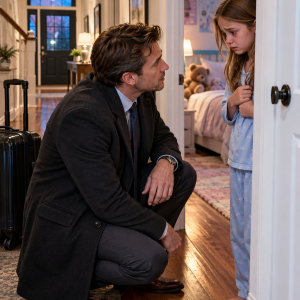
By the time I unlocked my apartment door, my older brother Bradley already had one hand on the handle, ready to leave.
Mom sat quietly with a clear plastic bag of medications resting on her lap. Her left hand trembled slightly from the stroke. She looked smaller than she had only a week earlier.
Bradley didn’t even step inside.
“There she is,” he said. “She’s discharged. The hospital says she shouldn’t be alone.”
I looked past him toward the parking lot.
His SUV was still running.
“What are you talking about?”
“You’re working from home.”
“I’m working full-time.”
He shrugged.
“Then you’ll figure it out.”
I stared at him, waiting for the rest of the sentence.
It never came.
Instead, he pulled a folded envelope from his jacket pocket and dropped it onto the wheelchair blanket.
“Medication schedule. Physical therapy appointments. Home health should call sometime next week.”
I looked at Mom.
She wouldn’t meet my eyes.
“Bradley…” I said slowly. “Where are you taking her after this?”
He blinked.
“I’m not taking her anywhere.”
Silence settled between us.
Finally he smiled like he was explaining something obvious.
“You’ve complained for years that I was Mom’s favorite. Congratulations. Now you get your turn.”
Then he walked away.
I watched him climb into the SUV and drive out of the apartment complex.
He never looked back.
My Apartment Was Never Meant for This
My apartment sat on the second floor of a building that didn’t even have an elevator.
The only reason Mom had made it upstairs was because Bradley and one of the hospital transport workers had carried the wheelchair together.
Now it was just me.
The hallway barely fit the chair.
The bathroom doorway was too narrow.
The kitchen counters were too high for someone who couldn’t stand for more than a few seconds.
I crouched beside Mom.
“Can you tell me what’s going on?”
She forced a tired smile.
“Bradley’s under a lot of pressure.”
There it was.
The excuse.
Even now.
I rolled her toward the living room, moving furniture as I went.
The wheelchair bumped against every doorway.
That chair became the center of my apartment.
Every morning I pushed it toward the kitchen.
Every afternoon I parked it beside the window.
Every evening I folded blankets around it because my sofa was too low for her to transfer safely.
The wheelchair never really fit.
Neither did this arrangement.
The House She Bought for Him
Three days later I called Bradley.
He answered on the fourth ring.
“Everything okay?”
His voice sounded relaxed.
Almost cheerful.
“No. None of this is okay.”
“She’s safe, isn’t she?”
“She needs a wheelchair-accessible home.”
“She has one.”
I stopped talking.
So did he.
Finally I asked,
“Then why isn’t she there?”
He sighed into the phone.
“Evelyn, Cynthia and I are leaving for an extended work assignment. We can’t provide twenty-four-hour care.”
“What assignment?”
“Out of state.”
“Where?”
Another pause.
“Seattle.”
The answer came too quickly.
Then he changed the subject.
“Look, you’ve always been good with this kind of thing.”
I almost laughed.
This kind of thing?
Taking care of the mother who had spent decades reminding me my brother needed more help than I did?
After I hung up, I found Mom staring at an old framed photograph on my bookshelf.
Dad stood between Bradley and me, each of us holding one of his hands.
Mom smiled at Bradley.
Dad smiled at both of us.
I hadn’t noticed that difference until years later.
Things I Had Stopped Talking About
People always assume favoritism is dramatic.
Sometimes it’s just quiet repetition.
Bradley wanted a new truck after college.
Mom helped with the down payment.
I worked evenings to pay my student loans.
When Bradley and Cynthia wanted to buy a larger house, Mom used part of Dad’s retirement savings to help them.
She called it an investment in the family.
When I asked whether she could help with my graduate tuition, she hugged me.
“You’re stronger than your brother.”
When I was eighteen, she packed two boxes, placed them beside the front door, and kissed my forehead.
“You’ll be okay.”
She wasn’t angry.
She simply believed Bradley needed her more.
That sentence had followed me for almost twenty years.
I Started Looking Anyway
Two weeks passed.
My life became medication alarms, grocery deliveries, physical therapy exercises, and sleeping on a folding mattress beside Mom’s wheelchair.
One Tuesday afternoon I stopped by her house to collect another box of medical supplies.
The driveway should have been empty.
Instead, I noticed fresh tire tracks.
The lawn had been watered.
Someone had collected the mail.
I stood there for nearly a minute.
Then I drove around the block.
A moving truck sat behind the house.
Two men carried furniture through the front door.
Not out.
Inside.
I parked across the street.
Five minutes later Bradley stepped onto the porch carrying a coffee mug.
Cynthia followed with a roll of decorative wallpaper.
Neither looked like someone preparing for a business trip.
I lifted my phone.
One picture.
Then another.
Then a short video.
Bradley unlocked the front door with his own key.
He laughed at something Cynthia said.
The moving truck kept unloading furniture.
I stayed inside my car until they went back into the house.
Only then did I drive away.
One Phone Call Changed Everything
That evening Mom noticed I wasn’t talking much during dinner.
She pushed mashed potatoes around her plate.
“Something happened.”
I set my phone beside her medication organizer.
“Bradley never went to Seattle.”
She frowned.
“What do you mean?”
I opened the photos.
She leaned forward.
Her fingers froze against the blanket covering her knees.
Bradley.
Standing on her front porch.
Boxes everywhere.
Workers carrying furniture inside the house she still owned.
Mom looked at the screen for a long time.
Finally she whispered,
“He said they were staying in hotels.”
I nodded.
“They’re living there.”