PART 1 — THE MANILA ENVELOPE
The first call I received from my mother after surgeons fused steel rods and titanium screws into my lower spine was not to ask whether I could walk.
It was to explain why she had missed the surgery.
Three days earlier, I had been wheeled into an operating room knowing there was a real possibility that the degenerative damage in my lumbar spine could leave me with permanent nerve problems if the procedure failed. The operation lasted more than six hours. When I woke in intensive care, shaking so badly that a nurse had to hold a cup of ice chips against my mouth, the chair beside my bed was empty.
It stayed empty that night.
And the next morning.
My father never called. My mother sent no text. My younger sister Chloe, whose social-media feed somehow found room for photographs of champagne, flowers and a white cake with CONGRATULATIONS, CHLOE! written across it in gold icing, did not even send a thumbs-up emoji.
By the third afternoon, I had stopped checking my phone.
Then it vibrated against the hospital sheet.
MOM.
For one humiliating second, relief rushed through me anyway.
I answered.
“Hi, sweetie,” she said brightly. “I wanted to check in. I hope you understand why we couldn’t be there.”
I stared at the ceiling while the monitor beside me continued its steady electronic rhythm.
“Why you couldn’t be where?”
There was a pause.
“Maya, please. Don’t start. Your father and I had already committed to Chloe’s promotion weekend, and there were people coming from out of town. We couldn’t just cancel everything.”
Promotion weekend.
My sister had been promoted to senior account manager at the marketing firm where she worked. I knew because my mother had spent the previous month discussing the country-club dinner as though Chloe had been appointed Secretary of State.
I had undergone spinal reconstruction.
“I understand perfectly, Mom,” I said. “Chloe’s promotion party mattered more to you than my spine.”
Silence.
For once, my mother did not immediately tell me I was being dramatic.
Then she exhaled.
“That is not fair. Chloe had one weekend that was supposed to be about her, and your surgery had doctors and nurses everywhere. You weren’t alone.”
That sentence did something twenty-four years of favoritism had never managed to do.
It made me stop wanting an explanation.
“Okay.”
“Maya—”
“I have to go.”
“Don’t hang up when I’m trying to—”
I ended the call.
I set the phone facedown and pressed both hands into the mattress because crying made the muscles around my incision tighten. Even then, my first instinct was to defend them to myself. Chloe was younger. Chloe had always needed more attention. My parents had already paid deposits for the party. Maybe Mom was right that sitting in a hospital waiting room would not have changed the outcome of my surgery.
That was how I had survived being their second daughter for most of my life: I translated every choice they made into a kinder language.
The door opened before I could finish doing it again.
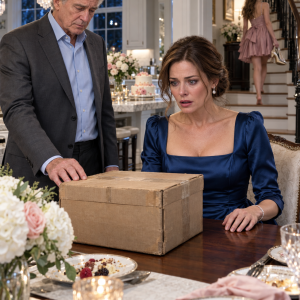
My aunt Sarah stepped inside carrying a sealed manila envelope.
She was my mother’s older sister, and normally she entered rooms like she owned them. That afternoon, she closed the door carefully behind her and stood there for several seconds without taking off her coat.
“How much pain are you in?”
“Depends whether you mean my back or my family.”
She did not smile.
That frightened me more than anything.
Sarah pulled the visitor’s chair close to my bed, but she did not sit immediately. Instead, she placed the envelope on my blanket.
My name was written across the front.
MAYA BENNETT.
Underneath it was my grandfather’s old estate attorney’s stamp.
“What is this?”
Sarah finally sat down.
“Your mother didn’t just choose Chloe’s party over your surgery.”
Her fingers tightened around the edge of the mattress.
“I think she stayed away because she was afraid of what you might find out if she came.”
I looked at the envelope again.
“Find out about what?”
Sarah swallowed.
“Your medical trust.”
I actually laughed.
It hurt enough that I immediately pressed a hand against my abdomen.
“I don’t have a medical trust.”
Sarah’s face changed.
That was when I stopped smiling.
“Maya, yes, you do.”
She opened the envelope.
The first page was an irrevocable trust agreement created by my grandfather seven years earlier. My name appeared on the first page as the primary beneficiary.
The original principal was $420,000.
For several seconds, I thought I was misunderstanding the document because of the medication.
“What am I looking at?”
“Dad knew your spinal condition could eventually require major surgery. He also knew your insurance might not cover everything, especially rehabilitation and long-term treatment. He created this specifically for your medical care.”
I stared at the number again.
$420,000.
My own credit-card balance was almost $19,000.
I had emptied most of my savings to cover deductibles, out-of-network consultations, imaging, physical therapy and the portion of the surgery my insurance required me to pay. The week before admission, I had sat at my kitchen table moving numbers between three credit cards because I was terrified that rehabilitation would cost more than I had left.
“Mom told me Grandpa left me his books.”
Sarah closed her eyes briefly.
“He did leave you his books.”
“She said that was all.”
“It wasn’t.”
The next documents were account statements.
At first, the withdrawals looked ordinary enough that I did not understand them. Then Sarah began pointing out dates and payees.
A tuition payment.
Another tuition payment.
A vehicle dealership.
A country club.
My eyes returned to the dealership entry.
“Chloe’s Mercedes?”
Sarah nodded.
I looked at the country-club payment.
$25,000.
The date was eleven days before my surgery.
“Her party?”
“Yes.”
The room became very quiet.
The promotion party my parents supposedly could not abandon because they had already spent so much money on it had been paid for with money my grandfather left for my medical treatment.
Sarah turned another page.
“There’s more, but I don’t want to overwhelm you while you’re recovering. I discovered the account discrepancies because I was reviewing Dad’s remaining estate records. I saw the trust reference, checked the annual statements and realized the balances didn’t make sense.”
“How much is left?”
She hesitated.
That hesitation answered before she did.
“A little under twelve thousand.”
I turned my head toward the window.
The movement pulled at my incision, but I barely noticed.
My mother had known I was borrowing money for surgery. She had listened while I worried about rehabilitation costs. Two months earlier, when I told her I might sell my car to reduce my debt, she had said, Sometimes adulthood means making sacrifices, honey.
At the time, I thought she was being dismissive.
Now I understood the sentence differently.
She had been watching me sacrifice things she knew I should never have needed to sacrifice.
“Did Chloe know?”
Sarah shook her head.
“I don’t know.”
“Don’t protect her.”
“I’m not. I genuinely don’t know yet.”
That distinction mattered.
I had spent too much of my life assuming that if my parents favored Chloe, Chloe must automatically be guilty of everything they did for her. Maybe she knew where the money came from. Maybe she did not.
I wanted facts.
“Who controlled the account?”
“Your mother was trustee while you were younger. The trust documents contain specific provisions about medical distributions and transition of control. That is one of the things an attorney needs to review immediately, because some of these withdrawals appear inconsistent with the trust’s purpose.”
“Why didn’t Grandpa tell me?”
Sarah looked toward the envelope.
“He thought your mother had.”
That hurt in a completely different place.
I picked up my phone.
Sarah reached toward me.
“Who are you calling?”
“Nobody.”
I opened my mother’s contact, stared at it, then blocked the number.
My father next.
Then I opened Chloe’s.
I hesitated.
Sarah noticed.
“Wait until you know what she knew.”
I left Chloe unblocked.
For the first time since waking from surgery, I had something more useful than anger.
I had a question.
Over the next four days, Sarah did something my parents had not done once: she showed up.
She brought clean clothes, helped me organize insurance paperwork and sat through the physical therapist’s explanation of what I could and could not safely do after discharge. She never tried to make herself the hero. When I became exhausted, she left. When I needed help, she returned.
She also contacted an attorney named Rebecca Sloan who specialized in trusts and fiduciary disputes.
Rebecca came to the hospital two days later.
She did not promise arrests, dramatic courtroom revenge or that every dollar would magically return.
She read the documents.
Then she asked me questions.
“Did you ever authorize your mother to use trust funds for Chloe’s education?”
“No.”
“The vehicle?”
“No.”
“The party?”
“I didn’t know the trust existed.”