The Evening I Finally Chose My Daughter

My father had just turned seventy when I finally understood that there was a difference between belonging to a family and spending your entire life trying to earn a place in one.
It happened on a beautiful Saturday evening in September, at his sprawling waterfront home overlooking Grand Traverse Bay in northern Michigan, where twenty of our closest relatives had gathered beneath crystal chandeliers to celebrate a man who had always considered himself the center of our family’s universe.
Through the enormous dining room windows, I could see the last of the afternoon sunlight resting on the water, while inside, white roses decorated the long mahogany table, expensive champagne filled the glasses, and a professionally catered dinner was being served on porcelain plates that my mother reserved for occasions when she wanted everyone to remember how well the family was doing.
Almost everything surrounding us, from the recently renovated kitchen to the beautifully landscaped gardens outside, had been made possible, directly or indirectly, by money from the business I had spent nearly two decades building.
Yet nobody sitting at that table seemed particularly interested in remembering that.
Beside me sat my twenty-year-old daughter, Abigail, wearing a pale blue dress she had purchased with money from her weekend job at a local stationery shop. Her long blonde hair was pulled neatly behind her shoulders, and resting in her lap was a carefully wrapped rectangular package tied with a silver ribbon.
Inside was a miniature wooden lighthouse she had designed and constructed herself.
Abigail was studying interior design at a university in western Michigan, and although her coursework kept her busy, she had spent nearly three weeks working on that lighthouse, carefully sanding each piece of wood, painting the tiny windows, and installing a miniature light that could be switched on from underneath the base.
My father, Richard Bennett, had always loved the Michigan shoreline, and Abigail believed that giving him something connected to his favorite childhood memories might finally help them develop the relationship she had quietly wished for since she was little.
What made the evening particularly important to her was something most of our relatives had never bothered to understand.
Abigail had lived with a noticeable stutter since childhood, and although years of speech therapy had helped her become more comfortable expressing herself, unfamiliar situations and large family gatherings sometimes made speaking considerably more difficult.
For several evenings before the celebration, I had heard her practicing in her bedroom.
“Happy seventieth birthday, Grandpa. I made something special for you.”
Sometimes she said the entire sentence without difficulty, and sometimes she needed to stop halfway through, breathe, and begin again.
I had reminded her repeatedly that she did not owe anyone perfect speech, especially the people who were supposed to love her.
Still, she wanted everything to go well.
When the main course arrived, Abigail leaned toward me and whispered that she thought it might be a good time to present her gift. I smiled and nodded, watching as she carefully lifted the package from her lap.
Before she could finish her birthday greeting, however, my younger sister, Meredith, raised her champagne glass and looked directly at her.
“Well, look who finally decided to speak,” she announced, smiling as though she were about to deliver an amusing family joke. “Our very own little family embarrassment.”
A few uncomfortable chuckles came from the opposite end of the table, while several relatives suddenly became interested in their dinner plates.
Abigail stopped speaking.
I watched the happiness disappear from her face as she slowly lowered the gift into her lap, and something inside me tightened when I noticed how instinctively she tried to make herself smaller in her chair.
“Meredith, that was completely unnecessary,” I said.
My sister rolled her eyes.
“Oh, Rebecca, please. She’s twenty years old. Are we still supposed to pretend everything she does is wonderful?”
I placed my napkin on the table.
“You’re going to apologize to my daughter.”
Before Meredith could respond, my mother, Elaine, released a long, impatient sigh and adjusted the pearl necklace I had given her the previous Christmas.
“Would you listen to yourself, Rebecca? After all these years, you’re still practically begging this family to accept that girl.”
For a moment, I could hardly believe that my own mother had spoken those words.
Abigail was not a stranger who had wandered into our lives, nor was she someone whose presence required special permission. She was my mother’s granddaughter, a thoughtful young woman who remembered birthdays, wrote handwritten thank-you notes, and spent hours creating meaningful gifts for people who rarely remembered to ask how she was doing.
“She shouldn’t have to earn acceptance from her own grandparents,” I replied.
My father pushed back his chair.
I expected him to tell Meredith that she had gone too far, but instead, he reached across the table, lifted Abigail’s nearly untouched dinner plate, and handed it to a member of the catering staff.
“If she’s going to be upset every time someone says something she doesn’t like, she can find somewhere else to have dinner,” he declared. “I’m not having my birthday spoiled at my own table.”
Abigail stared at the empty space in front of her.
She did not argue, complain, or ask for her food back. She simply held the little lighthouse against her chest, her fingers tightening around the silver ribbon as she struggled to keep her composure.
And in that moment, after years of explaining away my family’s behavior, I finally saw everything clearly.
I stood, reached for my daughter’s hand, and looked at my father.
“Then this is the last dinner you’ll ever have at my expense.”
He laughed so confidently that several people joined him.
“At your expense?” he repeated. “Rebecca, everything you’ve accomplished started with what this family gave you.”
Meredith leaned back in her chair.
“You might want to be careful, big sister. Dad could decide it’s time you started supporting yourself.”
I looked around the table at the people whose comfortable lives had depended on my willingness to solve their problems, and for the first time, I felt no desire to explain myself.
I removed the spare key to my parents’ house from my handbag, placed it beside my untouched dessert spoon, and turned toward the doorway.
“I hope you enjoy the rest of your evening.”
Then Abigail and I walked out together.
The Years I Spent Making Excuses
The drive home should have taken a little more than an hour, but I deliberately took the quieter roads along the shoreline because neither of us seemed ready to return to ordinary life.
For the first twenty minutes, Abigail sat silently beside me, holding the unopened package in her lap.
Eventually, she spoke.
“Mom, I’m sorry I messed up Grandpa’s birthday.”
Those words hurt more deeply than anything my sister or parents had said that evening, because they revealed how thoroughly my daughter had learned to accept responsibility for other people’s unkindness.
I pulled into a small parking area overlooking the water and turned toward her.
“Sweetheart, you didn’t do anything wrong. You brought him a beautiful present, and you tried to make him happy. What happened tonight was his choice, not yours.”
She looked down at the package.
“I thought maybe he’d like this one.”
I reached across the console and took her hand.
“Anyone who understands how much love went into making that would be fortunate to receive it.”
As she leaned against the window, I found myself remembering all the smaller incidents that had brought us to that evening.
There had been Christmas gatherings when Meredith interrupted Abigail before she could finish telling a story, Thanksgiving dinners when my mother suggested that she remain quiet rather than make the other guests uncomfortable, and family photographs in which my father always seemed to position her somewhere near the edge.
When Abigail was fourteen, she had received an award for a design project at school. She had been so proud that she brought the certificate to Sunday lunch, only for Meredith to glance at it and remark that schools seemed to give awards for practically anything nowadays.
I had defended her then, just as I had defended her on countless other occasions, but I had always returned to the family afterward.
Part of me believed that patience would eventually soften my parents, while another part was still the little girl who wanted to hear her father say he was proud of her.
I had grown up in a household where affection was rarely offered without expectations attached.
My father praised achievement when it benefited him, my mother valued appearances above uncomfortable conversations, and Meredith had learned early that making other people feel insignificant was an easy way to remain the favorite.
When I was twenty-two, I postponed my plans to complete a graduate degree in economics because my father’s struggling furniture showroom needed someone to reorganize its finances.
What began as a temporary favor became four years of long working days, unpaid weekends, and responsibilities far beyond what anyone had originally discussed with me.
Eventually, I helped transform that single showroom into Bennett Home Interiors, a regional chain specializing in premium furniture and home furnishings.
My father enjoyed telling people how he had built the company through determination and instinct, while I quietly negotiated supplier agreements, prepared financial projections, and found ways to keep the business operating whenever cash became scarce.
By the time Abigail was eight, I had established my own commercial financing company, Harbor Ridge Financial Partners, which specialized in providing carefully structured credit arrangements to established regional businesses.
Over the following twelve years, my firm grew into a respected independent financing organization with clients throughout the Midwest.
My father, meanwhile, continued introducing me at social gatherings as the daughter who helped him with his paperwork.
I had allowed him to tell that story for far too long.
By the time Abigail fell asleep against the passenger window, I had made a decision that had been waiting years for me to find the courage to make.
I pulled into a service station, parked beneath a streetlight, and called my firm’s chief financial officer, Martin Caldwell.
He answered on the third ring.
“Rebecca? Is everything all right?”
“Martin, the Bennett Home Interiors credit facility reaches its expiration tomorrow morning, correct?”
“That’s right. Nine o’clock. We still haven’t received the documents required for renewal.”
I looked at my sleeping daughter.
“Then proceed according to the existing agreement. There won’t be another extension.”
Related Posts

The father of my two children offered me $10 million to disappear after three years of living together. His mistress stood in my kitchen and sneered, “Take the money and get out. Did you really think having his babies would make you his wife?” I signed the papers without a word and left with our children that evening. Three days later, he was desperately trying to reach me. But when his lawyer finally revealed the truth about the agreement, it was already too late.

“Lauren! What Have You Done to This House?” My Husband Shouted After Returning From a Luxurious Fourteen-Day Cruise With His Mother. His Favorite Recliner Was Gone, the Bookshelves Were Empty, and All His Belongings Had Been Packed Away. They Had Left Me Alone to Care for Our Two Seriously Ill Children. I Calmly Placed a Folder on the Table and Smiled.
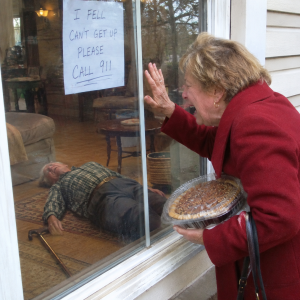
For nine years, I spent Thanksgiving delivering hot meals to elderly people who had nobody. This year, our new church chairman sneered, “We’re done feeding freeloaders. Let their families worry about them!” At 63, I used my own retirement savings to keep my promise. But when an 88-year-old veteran didn’t answer his door, I looked through the window and dropped his Thanksgiving dinner. What I found beside him would make that chairman regret every word he’d said.

“Mom, Christmas Is for Immediate Family Only This Year,” My Daughter Texted Me After I Had Hosted Christmas for 41 Years. Her Husband’s Parents Were Invited, but I Wasn’t. At 72, I Simply Replied, “Understood,” and Sent Three Handwritten Letters to My Grandchildren. At 9:02 on Christmas Morning, Two of Them Arrived on Bicycles in the Snow. Four Minutes Later, My Daughter Rushed Inside, Demanding to Know What I Had Written — but It Was Her 12-Year-Old Daughter Who Revealed What Had Been Said Behind My Back on Christmas Eve