Part 1 — The Night My Husband Chose His Mother Again
The humidifier hummed in the corner of my son’s bedroom while I pressed a cool washcloth against his burning forehead, listening to my daughter cough through the wall.
Eight years of marriage had brought my husband and me two beautiful children, countless ordinary memories, and responsibilities I once believed we would always share.
That Tuesday evening, however, I was handling everything alone while my husband’s phone rang repeatedly downstairs.
My name is Lauren Bennett, and our family lived in a comfortable suburban home outside Raleigh, North Carolina.
My son, Owen, had developed a high fever, while his younger sister, Lucy, had been vomiting between exhausting periods of sleep.
The children had influenza, and neither was well enough to attend school or leave the house.
My husband, Eric, should have been helping me monitor their temperatures and keep them hydrated.
Instead, he was speaking with his mother.
“I understand, Mom, and I know how much this trip means to you.”
His voice sounded unusually patient, almost tender.
I hadn’t heard him speak to me with that same warmth for months.
Judith Bennett, my mother-in-law, had been widowed when Eric was sixteen.
Ever since her husband’s death, she had reminded Eric that they had survived their darkest years together.
According to Judith, that history entitled her to remain the most important person in her son’s life.
“After everything I sacrificed to raise you, Eric, I shouldn’t have to spend my remaining years feeling forgotten.”
Eric had heard some version of that statement at every birthday, holiday, and major family celebration.
Over time, he stopped recognizing it as emotional pressure and began treating it as a reasonable expression of maternal love.
I understood that Judith had experienced profound loss.
What I couldn’t understand was why her loneliness consistently mattered more than the needs of Eric’s wife and children.
When I returned downstairs, Eric was leaning against the kitchen counter, smiling at something his mother had said.
“How are the kids doing?” he asked after ending the call.
“Owen’s temperature reached one hundred and two earlier, and Lucy has been sick again.”
Eric opened the refrigerator.
“Poor kids. Hopefully they’ll start feeling better before the weekend.”
He took out a bottle of water, then glanced toward his phone.
That was the entire conversation about our sick children.
Part 2 — Fourteen Days Away From Everything That Mattered
I asked whether Judith was having another difficult evening, hoping Eric might finally recognize how much attention she demanded.
He sighed and gave me his familiar explanation.
“She’s lonely, Lauren, and you know she hasn’t been the same since Dad died.”
I reminded him that I hadn’t slept properly in two days and that both children needed constant attention.
Eric told me I was capable of handling things.
“You’re their mother, and you’ve always been good at managing situations like this.”
His words sounded complimentary until I considered what they actually meant.
Because I was dependable, my exhaustion apparently didn’t require consideration.
Because Judith felt lonely, every request she made became urgent.
A few minutes later, Eric carried a zipped travel bag into the kitchen.
“I was going to mention this earlier, but Mom and I are leaving Thursday for our Mediterranean cruise.”
I stared at him.
“You’re leaving in two days, when both of our children have influenza?”
He nodded.
The cruise would last fourteen days.
Judith had apparently been planning it for weeks, although Eric had never discussed the arrangements with me.
He described the itinerary with remarkable enthusiasm, mentioning coastal towns, beautiful ocean views, and meals overlooking the Mediterranean.
Then he explained that Judith needed the vacation because her blood pressure had been troubling her.
“Her doctor practically insisted that she take some time to relax, Lauren.”
I looked toward the staircase.
Owen had developed a temperature of one hundred and three the previous night.
Lucy could barely manage a few spoonfuls of soup.
“Our children need their father right now, Eric, and I have an important client presentation on Monday.”
He waved away my concerns.
“They’re dealing with a manageable illness, and you’re perfectly capable of taking care of them.”
Then he mentioned that his work bonus had finally arrived, making the vacation financially convenient.
I asked about the family trip we had been discussing for August.
Eric promised we could arrange something the following year.
“This vacation is for Mom, and I want her to enjoy something special while she still can.”
He had even booked an upgraded cabin with a private balcony.
I stood silently beside the kitchen counter, struggling to reconcile his excitement with the sound of our sick children upstairs.
Then I remembered the refinancing documents waiting in a folder nearby.
Part 3 — The Documents He Couldn’t Be Bothered to Read

Our mortgage had become an increasingly difficult subject during the previous year, especially after several household expenses arrived at inconvenient times.
My parents had offered to lend us money for a refinancing and ownership restructuring, but Eric usually avoided financial paperwork that required his careful attention.
That evening, I brought the folder to the counter.
“The bank finally sent the remaining documents, and they need your signatures before Friday.”
Eric barely glanced at the papers.
“Leave them there, Lauren, and I’ll sign whatever they need tomorrow.”
I reminded him that he should read everything before agreeing to any financial transaction.
He laughed.
“You’ve handled our household documents for years, and I trust you to explain anything important.”
The refinancing process had already required Eric to visit the bank, where a notary had witnessed several signatures.
He had complained about losing part of his lunch break and repeatedly insisted that he didn’t have time to examine every page.
I remembered him saying that I should simply tell him where to sign.
Even then, his carelessness had frightened me.
“These are serious documents, Eric, and you really should understand what you’ve agreed to.”
He looked toward the phone lighting up beside him.
Judith was calling again.
“We’ll deal with the paperwork later, Lauren, because Mom needs to speak with me.”
He walked toward the living room before I could respond.
From the hallway, I heard him reassure Judith that everything was arranged.
“Yes, Mom, I’ve told Lauren already, and she’ll be perfectly fine while we’re gone.”
I stood alone in the kitchen.
A year earlier, I might have followed him and apologized for sounding critical.
I might have explained my concerns more gently, hoping that different words would finally make him understand.
That night, I stopped myself.
For the first time, I allowed him to walk away without pursuing another exhausting conversation.
Two days later, Eric kissed our children’s foreheads, collected his suitcase, and left for the airport with Judith.
Owen was still weak, and Lucy remained too tired to play with her favorite toys.
I watched the car disappear down our street.
Inside the house, the air smelled of menthol ointment, warm blankets, and slightly burned toast.
I didn’t yet understand how much the next fourteen days would change our lives.
Part 4 — The Missing Money
By Friday morning, both children were showing small signs of improvement.
Lucy finally slept through most of the night, while Owen managed to keep down toast and applesauce without becoming sick again.
I prepared another round of drinks, checked their temperatures, and helped Lucy settle on the sofa with her stuffed rabbit.
Then I opened my laptop to review our household accounts.
The available balance was much lower than I expected.
At first, I assumed a payment had been recorded incorrectly.
I refreshed the page and checked our recent transactions.
The same unfamiliar deduction appeared again.
The recipient was Azure Mediterranean Cruises.
The description identified a nonrefundable upgrade to premium accommodations.
I examined the amount for several seconds before checking the remaining accounts.
The money hadn’t come from Eric’s work bonus.
It had come from funds we had set aside for our children’s future education.
Eric had used money intended for Owen and Lucy to purchase a more luxurious cabin for himself and Judith.
I opened the relevant statements again, hoping I had misunderstood how the payment had been processed.
But the transaction remained unmistakable.
There was no corresponding deposit showing the work bonus Eric had described.
He had simply taken money already belonging to our family’s plans.
For a long moment, I sat perfectly still.
I expected to cry, but no tears came.
Related Posts

The father of my two children offered me $10 million to disappear after three years of living together. His mistress stood in my kitchen and sneered, “Take the money and get out. Did you really think having his babies would make you his wife?” I signed the papers without a word and left with our children that evening. Three days later, he was desperately trying to reach me. But when his lawyer finally revealed the truth about the agreement, it was already too late.

My Father Took Away My 20-Year-Old Daughter’s Dinner Plate in Front of 20 Relatives at His 70th Birthday Party After My Sister Called Her “The Family’s Little Embarrassment” Because of Her Stutter. When I Stood Up for Her, Mom Said, “Look at You, Still Begging Us to Accept Her.” I Took My Daughter’s Hand and Told Dad He’d Just Enjoyed His Last Dinner at My Expense. He Laughed, and My Sister Mocked Me. On the Drive Home, I Made One Phone Call. By 9 the Next Morning, Dad Was About to Discover What I’d Been Doing for His Family for the Past 12 Years — and What I Had Just Decided to Stop.
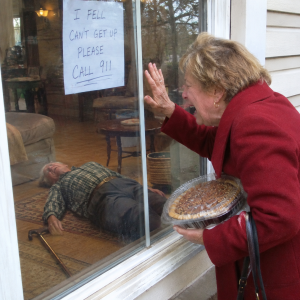
For nine years, I spent Thanksgiving delivering hot meals to elderly people who had nobody. This year, our new church chairman sneered, “We’re done feeding freeloaders. Let their families worry about them!” At 63, I used my own retirement savings to keep my promise. But when an 88-year-old veteran didn’t answer his door, I looked through the window and dropped his Thanksgiving dinner. What I found beside him would make that chairman regret every word he’d said.

“Mom, Christmas Is for Immediate Family Only This Year,” My Daughter Texted Me After I Had Hosted Christmas for 41 Years. Her Husband’s Parents Were Invited, but I Wasn’t. At 72, I Simply Replied, “Understood,” and Sent Three Handwritten Letters to My Grandchildren. At 9:02 on Christmas Morning, Two of Them Arrived on Bicycles in the Snow. Four Minutes Later, My Daughter Rushed Inside, Demanding to Know What I Had Written — but It Was Her 12-Year-Old Daughter Who Revealed What Had Been Said Behind My Back on Christmas Eve