No preference based on gender.
No preference based on surname.
When Harrison called to tell me, he said:
“The girls will have equal trusts.”
I immediately objected that guilt was unnecessary.
“It is not guilt,” he said. “It is belonging.”
That silenced me.
The same man who once believed his daughters could be replaced by a son now understood they had never stopped belonging to his family.
PART 8: A FAMILY THAT CHANGED SHAPE
Celeste eventually contacted Michael, her former husband.
They met with the fertility clinic and reviewed their options regarding the remaining embryo.
Michael had remarried three years earlier and had an eighteen-month-old daughter.
There was no unfinished romance between them.
Only two people facing a remnant of a future they once imagined together.
They jointly chose to donate the embryo for approved medical research.
Harrison struggled with the situation but ultimately respected Celeste’s decision.
That mattered to her.
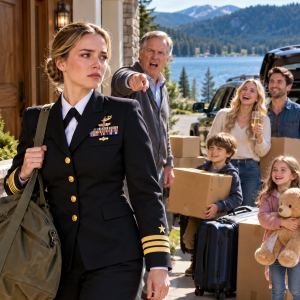
By Christmas, Harrison visited Barcelona.
He stayed in a hotel because boundaries remained important.
When Lily saw him outside arrivals, she screamed his name and ran into his arms.
Grace approached more slowly, but when Harrison hugged her, she held on longer than he expected.
We ate dinner together with my mother and Elena, my fellowship coordinator who had become a close friend.
There was no dramatic reconciliation.
There was no suggestion that Harrison and I belonged together again.
What surprised me most was realizing I did not want our marriage back.
Healing did not mean wishing the past had never happened.
It meant being able to remember the past without wanting to live inside it again.
Before returning home, Harrison told me something else.
He and Celeste planned to give their son the middle name Benjamin, after my late father, who had loved Grace and Lily deeply and had once told Harrison that daughters taught a man whether he could love someone without needing to see himself reflected back.
I cried.
Not because I wanted Harrison again.
Because respect had survived where marriage had not.
Three months later, Celeste gave birth to a healthy boy named Noah Benjamin Whitmore.
Harrison called after midnight Barcelona time.
His voice trembled.
“He is here. Both of them are healthy.”
The following morning, Grace and Lily met their brother through video.
Lily stared at the bundled newborn.
“He looks like a potato.”
Celeste laughed.
“That was also my first impression.”
Grace leaned toward the screen.
“Hi, Noah. I am Grace, and that is Lily. We live in Spain, and we are your sisters.”
Harrison looked away briefly.
That simple sentence accomplished more than any apology.
Not competitors.
Not former children.
Not daughters replaced by a son.
Sisters.
PART 9: THE LEGACY THEY FINALLY CHOSE

A year after the divorce, my fellowship became a permanent job offer.
I wanted to stay.
The girls loved Barcelona.
Yet they also loved their father, grandparents, and little brother.
Instead of deciding for them, I asked what they wanted.
Grace wanted to remain in Spain but see Harrison more often.
Lily suggested moving America closer, then reluctantly accepted that airplanes were easier.
We created a workable arrangement.
Summers and part of winter break in the United States.
Several visits from Harrison each year.
Weekly calls.
Schedules.
Airports.
Effort.
Family did not need one address.
It needed people who kept showing up.
By Noah’s first birthday, the extended family gathered at Patricia and Charles’s house.
Patricia brought out the old Whitmore family watch, which traditionally passed from eldest son to eldest son.
Everyone expected Harrison to eventually reserve it for Noah.
Instead, Harrison placed it in Grace’s hands.
She looked confused.
“Is this mine?”
“Not automatically.”
“Then whose is it?”
“Whichever one of you eventually wants it for the right reasons.”
Lily immediately asked whether she could sell it for a boat.
Everyone laughed.
The moment was small.
That was what made it meaningful.
Families rarely change through one great declaration.
They change because somebody makes a different choice than the generation before.
Three years after the divorce, Noah visited Barcelona with Harrison and Celeste.
He was old enough to run after pigeons while Lily chased him through a plaza.
Grace, now thirteen, walked beside me.
“Mom, do you remember when Dad thought having a son was incredibly important?”
I looked at her.
“Who told you that?”
“Grandma Patricia said everybody was being ridiculous.”
That sounded exactly like Patricia after several years of reflection.
Grace looked toward Harrison, who had finally caught Noah and was carrying him upside down while the boy laughed.
“Did Dad hurt you because of that?”
“Yes.”
“Do you hate him?”
I thought carefully.
“No.”
“Why not?”
Because hatred would have been simpler than the truth.
“Because people can become better than the worst thing they once believed.”
Grace considered that answer.
“Does everyone?”
“No.”
“Then what makes the difference?”
I watched Harrison set Noah down while Celeste handed him a juice bottle and Lily shouted that she had discovered the most important pastry in Europe.
“Choices made repeatedly.”
Grace slipped her arm through mine.
Years earlier, I had left a divorce conference believing my family had collapsed.
I had misunderstood what was happening.
One version of our family had ended.
Another, less tidy and more honest version slowly replaced it.
There were two countries, former spouses, new partners, grandparents, sisters, a little brother, apologies, boundaries, and traditions that no longer controlled anyone simply because they were old.
The daughters I once feared were being discarded grew up knowing something far more important than whether their father had once dreamed of a son.
They knew they never had to compete for belonging.
Not with a brother.
Not with tradition.
Not with a surname.
Belonging was not something children were required to earn.
That became the inheritance we finally chose.
Not a company.
Not a watch.
Not the Whitmore name.
A wider understanding of family, large enough for daughters and sons, former spouses and new partners, grandparents who learned late, and adults willing to admit that love sometimes required changing the beliefs they inherited.
On the morning our divorce became final, Harrison told me:
“Take the girls with you.”
So I did.
I took them toward another country, another life, and eventually toward a family that learned something none of us understood when we first walked away from one another.
Sometimes leaving is not the opposite of love.
Sometimes distance is what finally gives people enough room to learn how to love one another better.