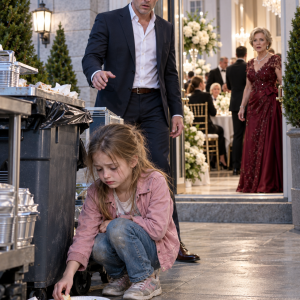
“My uniform grants responsibility rather than personal power,” I answered. “Tonight, that responsibility means ensuring my daughter can speak without being surrounded by people she fears.”
PART 3 — The Evidence They Could Not Reframe

Detectives executed the warrant early the following morning. They recovered Hannah’s damaged phone from Daniel’s study, found the guesthouse door fitted with a lock controlled from the exterior, and collected the hidden recorder exactly where she described.
The first recording captured Daniel warning that Hannah would lose access to every account if she spoke with an attorney. Another preserved Richard promising that newspapers would publish allegations about her mental health and supposed financial misconduct. Elaine’s voice appeared most frequently because she delivered threats with the controlled calmness of someone discussing household arrangements.
“Remain inside until Daniel decides you are prepared to behave rationally,” Elaine said in one recording. “This family spent generations building a respected name, and we will protect it from anyone who threatens it.”
A later segment contained Hannah crying near the utility door, followed by Daniel ordering someone to take her phone. The recording ended after a sharp impact and Richard’s instruction that household employees had witnessed nothing.
The Calloways’ attorneys argued that the statements reflected an emotional family dispute rather than criminal conduct. However, physical evidence supported Hannah’s account: exterior security footage showed Daniel pulling her away from the driveway, while hospital records documented injuries consistent with restraint and impact rather than a simple stairway fall.
The investigation gained momentum after Rosa Delgado, a longtime housekeeper, contacted police. She had seen Daniel escort Hannah into the guesthouse and heard Elaine prohibit employees from helping her. Rosa also preserved a text message from Richard warning staff that anyone discussing the incident would lose employment and housing assistance provided through the family.
Two former employees then approached investigators with similar accounts of intimidation. Neither claimed direct knowledge of Hannah’s assault, but both described a household culture in which Richard used financial dependence to enforce silence and Daniel’s conduct was routinely excused.
An assistant district attorney named Marissa Cole met us at the hospital. She avoided promises about outcomes but explained that the evidence could support charges involving unlawful restraint, assault, witness intimidation, and interference with emergency communication.
“Their influence may affect how aggressively they defend themselves, but it does not erase recordings, medical documentation, or security video,” Marissa told Hannah. “Your responsibility is to tell the truth rather than defeat their entire organization alone.”
Hannah’s relief appeared alongside terror. She understood that evidence offered protection, although it also guaranteed a public conflict with people who had spent years controlling the narrative.
Daniel attempted to contact her through flowers, emails, and messages sent from unfamiliar numbers. Some communications apologized for losing control, while others warned that police attention would ruin both their futures. Hannah gave everything to her attorney without responding.
I remained beside her while recognizing that protection could easily become another form of control. My military career had trained me to create plans, assign responsibilities, and eliminate uncertainty, but recovery required Hannah to reclaim decisions that Daniel had taken from her.
Before leaving the hospital, I asked where she wanted to stay, whether she preferred silence during the drive, and which friends she wanted informed.
“I want to come home with you, although I need the choice to remain mine,” she said.
“It will remain yours every day,” I promised. “My house can be a safe place without becoming another place where somebody commands your life.”
PART 4 — Learning to Choose Again
Hannah moved into my home near Nashville while temporary protective orders restricted contact from Daniel and his parents. During the first weeks, ordinary decisions exhausted her more than legal meetings did. She asked permission before using the kitchen, apologized for sleeping late, and became anxious whenever I changed plans without explaining why.
Each morning, I offered choices without demanding immediate confidence. She decided what to eat, whether to attend counseling, which visitors could enter, and whether she wanted company during attorney meetings. When she changed her mind, I treated the change as information rather than disobedience.
A trauma counselor helped Hannah understand coercive control, financial abuse, and the survival responses that had kept her inside the marriage. She struggled most with the belief that remaining with Daniel proved weakness.
One afternoon, I found her standing in the kitchen with untouched coffee, staring through the window.
“I should have left after he canceled my first gallery contract,” she said. “Every month I stayed gave him another reason to believe I accepted everything.”
I closed the report I had been reading. “You adapted to an environment designed to punish resistance, which means survival required choices that outsiders may misunderstand.”
“Survival does not feel courageous when you spend most days trying to become invisible,” she answered.
“Courage is not always visible during the moment it keeps someone alive,” I said. “Sometimes it appears later, when that person finally reaches a telephone and asks for help.”
Hannah began reconnecting with college friends and returned to painting in the spare room. Her first canvases contained locked windows, narrow hallways, and figures standing beneath enormous houses. Gradually, her colors widened into open landscapes and city streets.
She established a separate bank account, recovered income Daniel had redirected, and worked with a divorce attorney specializing in complex marital assets. Financial records revealed that Daniel had used Hannah’s commission payments to cover personal investments while representing her publicly as financially dependent.
Elaine filed statements claiming Hannah had displayed emotional instability, but medical records contradicted several dates and showed no diagnosis supporting incapacity. Richard’s communications consultant quietly offered a confidential settlement requiring Hannah to withdraw criminal allegations and sign a nondisclosure agreement.
“They still believe silence is something they can purchase,” Hannah said after reading the proposal.
“You should decide with your attorneys rather than rejecting anything merely because I am angry,” I replied. “Freedom includes making informed choices that other people may not prefer.”
Hannah declined the agreement because it attempted to restrict cooperation with prosecutors and future testimony. Her response requested a lawful property division without language concealing the documented conduct.
Several months later, she leased a small apartment and converted its brightest room into a studio. Moving away from my home frightened both of us, although keeping her close for my comfort would have contradicted everything we were rebuilding.
“You can call whenever you need me, but you never owe me proof that you are struggling enough to deserve help,” I told her.
PART 5 — The Courthouse Without Their Diamonds

The divorce and criminal proceedings developed on separate timelines. Daniel’s defense attorneys challenged the recorder, portrayed the injuries as accidental, and described Hannah as motivated by access to family wealth. Forensic examination confirmed that the files had not been altered, while timestamps aligned with security footage, hospital intake records, and employee messages.
The court maintained protective measures and prohibited Daniel from controlling Hannah’s accounts or contacting her outside authorized channels. Divorce discovery established that she had entered the marriage with independent artistic income and that Daniel had concealed several transfers derived from her work.
Richard faced allegations related to witness intimidation, while Elaine became central to the investigation because her recorded instructions demonstrated knowledge of the confinement. Their charitable reputation did not vanish immediately, but organizations began suspending partnerships after internal reviews revealed that employees had reported concerns before Hannah’s hospitalization.
The process remained exhausting rather than triumphant. Hannah endured questioning about why she stayed, why she had not reported earlier incidents, and why some recordings captured her apologizing to Daniel. Her counselor explained that appeasement commonly serves as a safety strategy, although hearing private fear discussed publicly still wounded her.
On the morning the divorce became final, Hannah stood outside the Louisville courthouse wearing a simple navy dress she had chosen herself. She carried no Calloway jewelry and refused the family driver offered through settlement negotiations.