GLAS Video Moral Stories

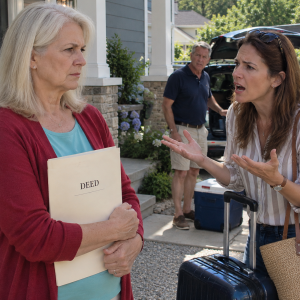
My Husband Publicly Introduced My Younger Sister’s Twins As His Own, Then Handed Me The Divorce Papers. I Signed Them Calmly And Asked, Are You Sure Those Children Are Really Yours? The DNA Results Later Revealed Their Real Father—and Everything My Husband Had Lost Because Of His Betrayal.

Part 1 – The Anniversary Dinner

For eight years, everyone in my husband’s family had treated our childlessness as a private failure that somehow belonged only to me. Every holiday carried another question, every birthday ended with another recommendation, and every medical appointment became evidence that I had failed to provide the future my husband believed he deserved.

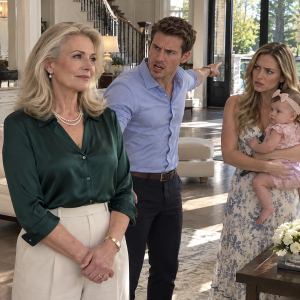
That was why our eighth-anniversary dinner felt almost theatrical from the moment I entered the dining room of our Lake Forest home outside Chicago. My mother sat rigidly beside the fireplace, while my husband’s mother, Margaret Holloway, looked as though she had been summoned to a funeral. Twelve relatives occupied the long table, pretending the candles, white roses, and crystal glasses meant we were celebrating a marriage instead of preparing to bury it.

Then my husband, Grant Holloway, entered carrying one newborn twin while my younger sister, Natalie, followed with the other.

Natalie wore a cream dress I had purchased for her six weeks earlier. She smiled with the soft confidence of someone who believed the entire room had already chosen her side. The twins slept against their shoulders, wrapped in blue-and-white blankets embroidered with the Holloway family initials.

Grant raised a champagne glass before anyone could ask a question.

“For eight years, I begged my wife to give me a family,” he announced. “Natalie accomplished in one year what Caroline never could.”

The room went silent with the kind of politeness wealthy families use when cruelty becomes inconvenient but entertaining. My mother lowered her eyes, perhaps from shame, perhaps because she had known. Margaret’s face lost its color completely.

Natalie tilted her head and smiled toward me.

“Some women are naturally meant for motherhood, while others are better suited to numbers and offices.”

I had paid the rent on Natalie’s apartment, cleared her student debt, and hired her into the finance department at Aurora Health Systems. I had defended her after missed deadlines, covered her counseling expenses, and introduced her to executives who later praised her ambition. Watching her hold one of the twins, I understood that gratitude had never existed where entitlement had been carefully fed.

Grant placed a folder beside my untouched plate.

“The divorce agreement is straightforward. I keep the house, the lake property, and my equity in Aurora. You keep your salary and whatever remains in your personal accounts.”

My attorney, Helen Price, sat two seats away as an invited family friend. She did not move, and neither did I.

I opened the folder, read the final page, and signed where Grant’s attorney had placed a yellow tab.

His expression changed immediately.

He had expected tears, bargaining, or a public collapse. Natalie had clearly expected me to defend my place as Grant’s wife, thereby proving that I still wanted a marriage he had already replaced.

“That is all?” she asked.

“That is all,” I answered.

Grant laughed, kissed Natalie’s temple, and carried the nearest twin toward the entrance hall.

“I knew you would eventually behave rationally.”

I watched him leave the home purchased through my grandmother’s trust before my marriage. Then I gathered every glass Grant, Natalie, and the twins had used and placed them inside evidence bags Helen had brought in her briefcase.

Margaret seized my wrist.

“Caroline, please do not do this.”

I looked at the woman who had spent eight years watching me accept blame for something that had never been mine.

“You asked me to protect him, and I protected him longer than anyone deserved.”

Her eyes filled with tears.

Nine years earlier, after Grant completed treatment for testicular cancer, a fertility specialist had confirmed that he was permanently sterile. Margaret begged the physician to tell Grant only that his chances were extremely low. She later begged me to preserve the lie because his identity, confidence, and relationship with his father depended upon the belief that he could eventually have children.

I accepted injections, procedures, surgeries, and endless questions while Grant watched me apologize for failing him. He never knew the treatments were largely pointless because his mother and I had constructed a silence around his pride.

Now he had publicly claimed children he could not possibly have conceived.

My phone vibrated beneath the table. The private laboratory confirmed that the samples had entered chain-of-custody processing.

Grant believed my signature had ended the contest. In reality, it had authorized the first audit of his life.

Part 2 – What The Signature Actually Meant

Grant moved Natalie and the twins into Margaret’s town house that same evening. Before midnight, he sent photographs showing Natalie in silk pajamas beneath a banner reading Welcome Home, while Grant held a bottle beside one sleeping infant.

His message arrived seconds later.

“You should appreciate that I am not requesting spousal support.”

I forwarded everything to Helen and went to Aurora’s headquarters before sunrise.

Aurora Health Systems was not Grant’s company, although he described it that way whenever donors or journalists were listening. My grandmother, Eleanor Bennett, had created the original medical investment trust, while I had transformed its struggling hospital assets into a national diagnostics and research network. The family trust held sixty-four percent of Aurora’s voting shares in my name.

Grant received an executive strategy title after our wedding because I wanted him to possess a career independent from his father. Over time, he confused proximity to ownership with ownership itself.

For six months, I had been investigating irregular payments approved through his division. Eleven million dollars had moved from Aurora into three consulting companies that produced no measurable work. Two companies were controlled through Natalie’s former college roommate, while the third belonged to Grant’s closest friend, Derek Mason, Aurora’s vice president of acquisitions.

The invoices described market research, integration planning, and international compliance reviews. Their supporting documents contained copied paragraphs, invented personnel, and addresses leading to the same rented mailbox in Evanston.

Grant had authorized every payment.

Natalie received almost three million dollars, while Derek controlled the remainder.

Their plan was not limited to adultery. They had been draining Aurora before the divorce, assuming Grant’s imaginary equity would allow them to hide the losses once I surrendered control.

At noon, Grant entered the executive floor with Natalie beside him. She wore a red dress and carried one twin, while a nanny followed with the other. Employees stopped speaking as they crossed the reception area.

Grant pointed toward my office.

“Have security clear Caroline’s belongings. Natalie wants this room because it has the best view.”

The security director looked toward me from across the lobby. I nodded once, allowing the scene to continue.

Natalie approached until her perfume overwhelmed the clean office air.

“You always believed intelligence made you untouchable.”

“No,” I replied. “Documentation makes people difficult to remove.”

Grant threw the signed agreement onto the conference table.

“She surrendered everything last night.”

Helen opened the document calmly.

“She agreed to dissolve the marriage. Property division remains governed by the prenuptial agreement you signed nine years ago.”

Grant’s smile disappeared.

Our agreement contained an infidelity clause, a financial misconduct clause, and a provision canceling every unvested benefit connected to my trust if Grant committed fraud or concealed marital assets. His executive title, options, housing allowance, and access to the lake property could disappear immediately upon verified evidence.

Natalie tightened her hold around the infant.

“Grant has children to support.”

I looked at the twins before answering.

“That remains to be established.”

A laboratory courier arrived with a sealed envelope. Margaret followed him into the conference room, trembling so noticeably that she had to steady herself against the door.

Grant frowned.

“Mother, why are you here?”

Margaret looked from him to the babies, then toward me.

“Wait,” she whispered. “Caroline has not told you?”

Part 3 – The Secret Margaret Protected

Grant laughed once, although nobody else joined him.

“Told me what?”

I placed his original fertility report beside the newly delivered DNA results.

“Your cancer treatment left you permanently sterile before our wedding. According to the DNA analysis, neither twin is biologically related to you.”

The room became completely still.

Natalie stepped backward.

“Those tests are fraudulent.”

Helen removed the chain-of-custody documentation.

“The samples were collected from drinking glasses and feeding bottles preserved immediately after use. A court-approved laboratory processed them under documented procedures.”

Grant stared at his mother.

“You knew?”

Margaret covered her mouth, crying too hard to speak.

“She knew,” I answered. “I knew, and your specialist knew. Your mother believed the truth would destroy you, so I allowed everyone to blame me instead.”


His face twisted between disbelief and anger.

“You let me undergo eight years of false hope.”

“I underwent the procedures. You watched.”

Before he could respond, the conference room doors opened. Derek Mason entered carrying a laptop for the emergency board meeting he believed would confirm Grant’s new authority.

He stopped upon seeing the laboratory reports.

One twin opened his eyes. The infant had Derek’s gray eyes, distinctive cleft chin, and narrow jaw.

Grant turned slowly.

“Derek?”

Derek’s gaze moved toward Natalie, who immediately looked away.

“This is not what you think.”

Grant crossed the room so quickly that security stepped between them.

“Are those children yours?”

Derek remained silent.

Natalie shifted the baby against her shoulder.

“Grant, you need to calm down.”

His attention snapped toward her.

“You told me the physician confirmed they were mine.”

“You wanted them to be yours. You never asked to see the report.”

That answer destroyed whatever restraint remained.

Grant lunged toward Derek, but two security officers forced him against the glass wall. The nanny hurried the twins into a nearby office while employees retreated from the lobby.

Natalie watched Grant struggle and spoke with sudden bitterness.

“Do not act morally offended. You used Caroline’s money, company, and reputation for years. You promised me control of Aurora after the divorce, and I believed you knew what you were doing.”

Grant stopped resisting.

He looked toward me as though I had somehow created the betrayal by exposing it.

“You planned this entire humiliation.”

“I did not arrange your affair, the twins, or the fraudulent invoices. I merely refused to remain the person who absorbed the consequences.”

Margaret reached for him.

“Grant, I am sorry. I should have told you years ago.”

He recoiled from her hand.

“You let me believe Caroline was responsible.”

Margaret’s voice broke.

“I believed I was protecting you.”

“You were protecting his pride,” I said. “Protection would have required honesty, treatment, and grief counseling. Instead, both of us protected the version of Grant who never had to question himself.”

Helen announced that the board had assembled upstairs and that the meeting would proceed as scheduled.

Grant stared at the sealed financial files waiting on the table.

For the first time, he understood that the DNA report was only the beginning.

Part 4 – The Eleven-Million-Dollar Trail

The emergency board meeting began twenty minutes later inside Aurora’s main conference room. Grant sat between two security officers, while Natalie and Derek occupied opposite ends of the table under instructions not to communicate.

I presented six months of banking records, false invoices, altered approvals, and internal messages recovered through Aurora’s compliance review.

One message from Natalie read:

Once Grant divorces her, he controls the trust through the marriage settlement.

Derek responded:

He still believes the twins are his. Keep him proud and distracted until the transfers finish.

Another exchange described purchasing condominiums through shell companies and moving funds through a medical consulting account registered under Natalie’s former roommate.

Grant stared at the messages.

“You both used me.”

Natalie gave a harsh laugh.

“You used Caroline for eight years and expected applause. Do not pretend betrayal became immoral only after it reached you.”

Derek lowered his head.

“Grant approved every invoice. I assumed he understood the arrangement.”

The audit showed that Grant rarely read documents before signing them. He had relied on Derek’s summaries because reviewing compliance material bored him, while his title allowed him to approve transactions below a predetermined threshold.

Grant turned toward the directors.

“I was deceived. My signatures were obtained under false pretenses.”

Aurora’s independent chairwoman, Judge Rebecca Collins, examined him without sympathy.

“Negligence does not erase fiduciary responsibility. You approved eleven million dollars in transfers while preparing to claim ownership of assets you never possessed.”

I activated the final presentation slide, which displayed charges made against the employee health fund. Several sham invoices had been paid from reserves intended for emergency treatment, rehabilitation, and family medical assistance.

This was not abstract corporate theft. Employees had faced delayed reimbursements because Natalie, Derek, and Grant redirected funds toward luxury apartments, travel, jewelry, and private childcare.

The directors voted unanimously to remove Grant and Derek from every position, freeze their compensation, and refer the evidence to federal investigators. Natalie’s employment was terminated for cause, while Aurora obtained emergency orders blocking accounts linked to the shell companies.

Grant looked toward me after the vote.

“You cannot leave me with nothing.”

“The prenuptial agreement leaves you with your personal savings, clothing, and any property purchased independently with legitimate income.”

“The house is mine.”

“The house belonged to my trust before our marriage.”

“What about the lake property?”

“It also belongs to the trust.”

His voice dropped.

“What about my options?”

Helen closed the agreement.

“They are canceled under the financial misconduct provision.”

Grant leaned back as though the room had tilted beneath him.

For years, he had believed I existed between him and discomfort. I paid bills, repaired his mistakes, negotiated with his family, absorbed fertility blame, and preserved his professional reputation whenever he treated responsibility as an administrative nuisance.

Now he was facing consequences without my body, money, or silence placed between him and the damage.

Part 5 – What Eight Years Had Cost

After the directors left, I asked security to remain while I spoke to Grant.

He looked exhausted rather than powerful, and for a moment I could see the frightened patient he had been after cancer treatment. That memory had once controlled every decision I made around him.

“You let me undergo four operations,” I said. “You watched me wake from anesthesia and apologize for failing you. You allowed your relatives to question my femininity while you accepted their sympathy.”

Grant’s eyes filled with tears.

“I genuinely did not know I was sterile.”

“No, you did not. However, you knew I was suffering and decided that my pain proved your innocence.”

He lowered his face.

“Why did you never tell me?”

“Because your mother convinced me that love meant carrying the truth until you were strong enough to hear it. Eventually, I realized you had no reason to become stronger while everyone protected you from reality.”

Margaret began crying again.

“Caroline, I am sorry for what I asked you to do.”

I believed she regretted it. Regret, however, could not restore surgeries, years, or dignity.

“You asked a young wife to preserve your son’s pride by sacrificing her own body. I forgive myself for agreeing, but forgiveness does not require me to pretend the damage was harmless.”

Grant looked toward Natalie.

“Did you ever love me?”

She folded her arms.

“I loved the life you promised. You said Caroline would sign everything because she was too ashamed to fight.”

His expression collapsed.

“What about Derek?”

“Derek was useful before you became useful.”

The cruelty of her answer shocked even Derek.

He finally looked toward the closed office where the twins waited with the nanny.

“Whatever happens to us, the children should not be punished.”

That was the first responsible statement anyone among them had made.

“They will not be,” I replied. “Their legal interests will be handled separately from the fraud investigation.”

Grant asked whether I had ever intended to become a mother with him if the treatments succeeded.

“I intended to build a family with the man I believed you were. That man disappeared gradually because I kept protecting him from the choices that revealed his character.”

He whispered my name, but I gathered the remaining documents and left.

For the first time in eight years, I did not turn back to reassure him.

Part 6 – Consequences Without A Shield

The investigation lasted fourteen months.

Additional DNA testing confirmed Derek as the biological father of both twins. Natalie filed for child support, while Derek’s wife initiated divorce proceedings and provided investigators with financial records he had hidden inside a family investment account.

Federal prosecutors charged Natalie and Derek with wire fraud, conspiracy, money laundering, and theft from an employee benefit fund. Grant avoided the most serious criminal charges by cooperating, although he pleaded guilty to falsifying certifications and failing his fiduciary duties.

Natalie received a prison sentence after prosecutors proved she had created the shell companies and coordinated the invoices. Derek received a longer sentence because he designed the payment structure and attempted to destroy evidence after the board meeting.

Recovered assets reimbursed Aurora and restored the employee health reserve.

Grant lost his executive career, professional credentials, and every benefit linked to my trust. He moved into a rented apartment above an automotive repair shop in Waukegan and found temporary work selling medical equipment for a regional supplier.

He wrote to me repeatedly.

Some letters blamed Natalie, some blamed Margaret, and others blamed the physicians who had concealed his diagnosis. The final letters contained apologies, but I returned every envelope unopened because his understanding no longer required my participation.

Margaret testified fully, surrendering medical correspondence and admitting that she had pressured me into secrecy. She entered therapy and began volunteering with cancer survivors navigating fertility loss.

I did not restore our former relationship. I allowed one supervised lunch every few months because accountability had changed her behavior, although trust remained something she would have to rebuild without demanding a deadline.

My mother also apologized.

She admitted that she had discovered Natalie’s affair several months before the anniversary dinner but remained silent because she feared losing both daughters.

“I thought keeping the family together was better than exposing the truth,” she said.

“Silence did not keep us together. It only ensured that I stood alone inside the family.”

We began repairing our relationship slowly, without pretending motherhood made her decisions harmless.

Aurora survived the scandal and expanded its compliance division. Every executive approval above a modest threshold required independent review, while employees gained direct access to anonymous reporting channels protected from retaliation.

I named Helen chief ethics counsel and gave her authority equal to the financial office.

The company became stronger because we stopped treating reputation as more valuable than truth.

Part 7 – A Different Path To Motherhood

Six months after the divorce became final, I returned to the reproductive endocrinologist who had treated me during the marriage.

For years, I had associated the clinic with failure, anesthesia, bruised hope, and Grant’s disappointed silence. This time, I entered alone and asked a different question.

“What choices remain if I want motherhood without building my life around another person’s permission?”

The physician reviewed my preserved eggs and explained donor options, embryo screening, and the emotional realities of becoming a single parent.

I did not decide immediately. Freedom had taught me that urgency and courage were not the same thing.

After counseling and months of planning, I created embryos using donor sperm. One successful transfer led to the birth of my daughter, Lily Bennett, nearly two years after the anniversary dinner that ended my marriage.

When the nurse placed Lily against my chest, I felt no victory over Grant, Natalie, or Margaret. Revenge had nothing to do with the warmth of her breathing or the weight of her tiny hand against my skin.

Motherhood was not proof that I had been worthy all along. I had never needed a child to prove that.

It was simply a life I chose after I stopped allowing other people’s lies to define my possibilities.

Natalie had initially treated the twins as evidence of power. During the criminal proceedings, she gradually understood that the children were not bargaining tools, financial shields, or symbols of victory.

Their custody arrangement placed them primarily with Derek’s parents, who passed extensive background reviews and committed to maintaining stable contact with both incarcerated parents where appropriate.

I contributed nothing financially beyond ensuring that Aurora’s legal actions did not interfere with the twins’ court-ordered support accounts. The children deserved security, but I would not become responsible for repairing every life damaged by choices I had never made.

Part 8 – The Eleanor Bennett Center

One year after Lily’s birth, Aurora opened a reproductive health and advocacy center on Chicago’s South Side.

I named it the Eleanor Bennett Center for Reproductive Truth and Care after my grandmother, who had taught me that financial power carried obligations beyond inheritance. The center provided independent fertility testing, counseling after cancer treatment, legal support for medical coercion, and affordable reproductive care for patients who had been blamed, misled, or excluded.

At the opening ceremony, I stood in the courtyard holding Lily while physicians, nurses, advocates, and former patients gathered beneath a clear autumn sky.

Margaret remained near the back, respecting the boundaries we had established. She had testified, disclosed the secret she once protected, and spent two years learning that remorse did not entitle her to immediate closeness.

Grant stood outside the gate.

He looked thinner, older, and surprisingly ordinary without the tailored authority Aurora had once provided. When our eyes met, he mouthed two words.

“I am sorry.”

I adjusted Lily’s blanket and turned toward the stage.

His apology might have been sincere, but sincerity did not require a reunion, conversation, or reward.

During my remarks, I described the center’s purpose without mentioning Grant by name.

“People are often told that silence preserves dignity, protects families, or prevents unnecessary pain. In reality, silence usually protects the person with greater power while forcing everyone else to carry the cost.”

I looked toward women sitting beside partners, parents, friends, and children.

“Truth can be painful, but informed choices are impossible without it. No patient should undergo treatment because another person’s pride is considered more valuable than her body.”

After the ribbon was cut, my mother approached and touched Lily’s small shoe.

“Your grandmother would have been proud of this.”

“She would have asked whether the budget was sustainable before admitting it.”

My mother laughed through tears, and for once the sound did not carry shame.

Grant left before the reception ended. I saw him walking toward the parking lot alone, but I felt no urge to follow.

For eight years, he believed my silence meant emptiness, weakness, and surrender. He never understood that silence can also become the space where someone studies the records, measures the damage, and prepares to leave without losing herself.

I had signed the divorce papers before dessert because the marriage had already ended long before the ink dried. What began afterward was not revenge, although those who benefited from my silence preferred to call it that.

It was accountability, recovery, and the first life I built without asking anyone else to confirm that I deserved it.

THE END

Related Posts

My Husband Gave His Mistress My Mother’s Earrings, My Designs, And Even The Name Of The Child I Had Lost. He Also Created More Than Four Hundred Thousand Dollars In Debt Under My Identity To Build A Company For Her. When He Whispered, You Are Confused Again, I Replied: Everything Has Been Fully Documented.

Part 1 – The Name Inside The Photograph At 11:38 on a Thursday night, my husband’s mistress announced that she was expecting a daughter. She used the exact...

I Never Told My Family I Owned the $100,000 Estate Where My Sister’s Wedding Would Be Held—The Day Before the Ceremony, My Mother Banned Me for “Ruining the Family’s Image,” and My Sister Tore Up My Invitation… The Next Morning, the Bride Arrived in White Only to Find the Estate Gates Chained Shut

The Sister They Preferred to Hide Every family quietly assigns its children a role. In the Marlowe family, my younger sister, Kendra, was the beautiful one. She was...

I Went to the Airport Only to Say Goodbye to a Friend—But Instead I Heard My Husband Hold His Mistress and Laugh, “That Fool Is About to Lose Everything.” I Never Stepped Forward… Because What I’d Discovered Two Weeks Earlier Was About to Cost Him Everything

I Went to the Airport to Say Goodbye—But Found My Husband Holding Another Woman I went to Minneapolis–Saint Paul International Airport on a cold Tuesday afternoon because my...

My Daughter’s Wealthy Fiancé Secretly Removed Me From Their Wedding Because I Was “Not Good Enough”—But When She Walked Away From the Altar and Crossed the Street to 42 Waiting Bikers, Every Guest Realized Who Truly Deserved Respect

The Father They Tried to Hide From the Wedding My name is Vernon Ashford, though nearly everyone who knows me calls me Vern. I am sixty-three years old,...

“She’s Mentall:y Unst@ble. She Did This to Herself,” My Brother Told the Police After Watching His Wife Sm@sh a Baseball Bat Across Our Mother’s Back at 2:27 A.M.—I Didn’t Argue, Didn’t Cry, and Didn’t Raise My Voice… Because They Had No Idea the Woman Walking Into That Police Station Investigated Elder Abu:se for the State Attorney General

The Call From the Bathroom At 2:27 a.m., my mother whispered from a police-station bathroom. “Rachel hit me with a baseball bat.” I sat upright in bed. Rain...

Để lại một bình luận

Email của bạn sẽ không được hiển thị công khai. Các trường bắt buộc được đánh dấu *