The Number on the Brass Washer

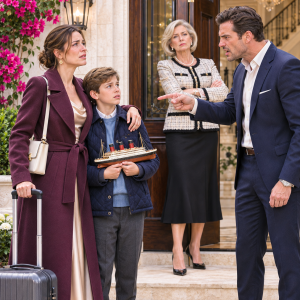
When my mother tied the top of my race-car pillowcase, she told me I would be staying with Grandpa for a little while, just long enough for her and Dad to take my little sister to Orlando. I was seven, and I still believed that grown-ups explained things because they wanted you to understand them, so I stood on the gravel drive outside our house near Omaha and watched my sister, Molly, wait beside the station wagon in a new straw hat with a pink ribbon. I asked whether there was another hat for me.
“You won’t need one where you’re going, Ben,” Mom said, smiling as if she’d made a joke we could all enjoy.
That was when I understood I wasn’t going to Orlando. Dad tossed my pillowcase into the back of the wagon, where it landed with a soft, lopsided thump, and I wondered what I had done that made a family vacation seem better without me. Mom leaned across the porch to speak with Grandpa, her arms folded against the breeze, while he stood with his arms folded too. Their matching posture was something I noticed, though I wouldn’t understand its meaning until much later.
My father, Mark, managed an insurance office, and my mother, Elaine, kept books for a group of medical clinics. They liked plans and numbers that balanced. Grandpa Arthur Bell farmed six hundred acres outside a small Nebraska town. Mom had grown up there, but never seemed glad to return.
She handed Grandpa my pillowcase and reminded me to behave. Then the wagon backed out, Molly’s new hat visible through the rear window, and the dust settled behind them. Grandpa didn’t tell me I would have the best summer of my life or that I’d forget missing home. He simply picked up my things and led me upstairs to a room beneath the slanted roof, where the quilt smelled faintly of cedar.
“Sun comes up at six,” he said. “We’ll be up with it.”
The first morning, I carried water to calves in a bucket too heavy for my small hands. Grandpa showed me which gates to latch and where the ground turned slick. He rarely praised me, but he stayed nearby, and if a job delayed supper, his meal waited beside mine.
At week’s end, he noted something in a pocket notebook and handed me a couple of bills.
“That’s all?” I asked.
“That’s your pocket money. The real pay comes in August.”
I pictured a bicycle or a toy, something a child could recognize as real pay. August came without my parents. I learned the sounds of the farmhouse and still missed the certainty of belonging with my family, but the farm began to feel like a place where someone expected me.
Near summer’s end, Grandpa took me for pie, then to the courthouse. Mrs. Keene gave me a peppermint while I signed a page for “handwriting practice.” I was careful with the letters and thought the paper was ordinary farm business.
That night, Grandpa brought me to his machine shed. The old dog, Buster, slept near the door, and the air smelled of oil and warm metal. From a drawer he took a small brass washer, set it on an anvil, and tapped a number into it with a punch. The last digit sat a little crooked.
He placed the washer in my palm, along with an empty red coffee tin.
“One for the can,” he said.
“What does the number mean?”
“It means you earned it.”
“What do I do with it?”
“Keep it. Don’t lose it. And don’t show your mother.”
The washer seemed an odd thing to hide, but I put it in the tin. Mom arrived the next morning with a Florida magnet on the rearview mirror and Molly asleep beside a stuffed dolphin. No one asked about my summer, and I kept the washer to myself.
Summers That Belonged to Someone Else
Each year my parents took Molly somewhere warm or far away, while I spent summer on the farm. A souvenir appeared on the refrigerator each fall, and my parents repeated their explanation: I loved the farm, Grandpa needed me, and I preferred staying. For a while, I wondered whether it might be true.
At eleven, I found photos of Molly’s resort birthday, cousins gathered around a cake beside the pool. I stared at an empty chair at the frame’s edge. Grandpa quietly closed the laptop, then let me help cover equipment before making hot chocolate without asking why I was quiet.
The next year, a young calf slipped into a muddy creek bed after a storm. Grandpa’s knees were stiff, so he held the rope while I climbed down and guided it toward the bank. I was frightened, but I could hear his voice above me, steady and clear, and together we got the calf onto solid ground. Grandpa rested his hand on the back of my neck.
“You’ve got a good hand,” he said.
He wrote in his notebook later. When I asked what the note was for, he said, “Extra hours.”
At twelve, I asked to join a family vacation. Dad laughed, and Mom said I loved the farm and Grandpa counted on me. When I suggested Molly stay instead, she cited her hay allergies; Dad said other boys would envy my summer.
They went to Italy.
I stopped asking about the washers. Each August, Grandpa made another, and we went to the courthouse for pie, peppermints, and signatures. I assumed the paperwork was ordinary, though the ritual began to embarrass me.
At fifteen, I asked once more to join a family trip. Mom said Molly was bringing a friend whose parents were struggling, and it would be unkind to change the plan. I packed for the farm without arguing.
One evening, while we sat on the porch, Grandpa told me that Mom had hated growing up there. He had worked her hard and paid her nothing, he admitted, and he had been too sparing with praise. Then he said she’d been the best worker he’d ever had before me. I didn’t know what to say, and he didn’t seem to need an answer.
In August, he held the newest washer in his palm longer than the others. He told me it was the last one, and the most important, because the next summer I would be starting my own life. At the courthouse, Mrs. Keene shook my hand. Grandpa’s attorney, Mr. Dwyer, was there, and I signed three pages instead of one. Outside, Grandpa looked up and down Main Street.
“That’s done, then.”
We went back to the diner for pie. I carried the red tin home, still unsure what the numbers meant. Yet as the day ended, I realized that leaving the farm hurt more than arriving there ever had.
The Years I Built for Myself

That fall, I earned a partial scholarship to the University of Nebraska’s agricultural program. I carried my acceptance letter to dinner, hoping my parents would see what it meant.
Dad said, “Good for you, Ben,” while looking at his phone. Mom said we should talk about the cost. We didn’t talk until March, when the deposit deadline was close. She told me the college money I thought had been saved for me wasn’t there anymore. I reminded her about the Christmas envelopes Grandpa had given her, marked for my education. She said the money had gone into the family account, and family expenses had come up: repairs, Molly’s dance classes, costumes, and travel. With my scholarship and my independent nature, she believed I would manage.
Molly appeared with a brochure for a summer dance program in London and Paris, and our parents planned to go with her. Mom glowed as she described it. I went upstairs quietly, realizing I could no longer explain the difference between our opportunities as an accident.
My parents left before my name was called at high-school graduation—Dad for work, Mom to pick Molly up from rehearsal. Grandpa stood in his good shirt and boots, clapping as I crossed the stage. He shook my hand afterward and said he was proud. He also offered to pay my first college expenses directly and reminded me that my room at the farm was always available.
I moved in after my parents left for Europe. My note stayed on the refrigerator beneath the magnet from Pisa. A few weeks later, Mom texted me from Paris asking where she could find the garage remote.
College meant lectures, a part-time job, and early shifts at the research farm. Every Sunday, I called Grandpa to talk about rain, soil, and cattle. I returned for holidays and harvests, and he gradually began asking my opinion. Our neighbor, Mr. Pike, started saying, “Ask Ben,” when a field or machine needed attention.
My parents missed my university graduation for Molly’s sorority event. Grandpa came with his cane and stood as I crossed the stage. I became a field agronomist and rented a house near the farm, building a quiet life of my own.
One March morning, Mr. Pike called: Grandpa had fallen in the barn and remained there overnight before he was found. He was taken to a Lincoln hospital with a fractured hip. My parents waited outside the surgery area. I hadn’t seen Mom in five years; she asked how I had arrived so quickly.
Mom held an old power of attorney and said Grandpa’s confusion meant he could no longer manage things himself. I looked toward the operating room. He had spent the night alone, and my parents were already deciding who would control his affairs.
The Farm in the Folder
When I was finally allowed to see Grandpa, he asked whether the cattle had been fed. I told him Mr. Pike handled the morning chores and I would take care of the evening ones. He reminded me about the red heifer in the east pen. His eyes were clear, and then he asked if Mom had brought paperwork.
“Of course she did,” he said when I told him.
That evening, the heifer delivered a healthy calf. I slept on the farmhouse couch and spent the next days dividing my time between work, hospital visits, and the farm. On the fourth day, I found surveyors marking the northern field. A representative from Prairie Sun Energy explained that my parents had signed preliminary papers for a solar project covering the whole section. He showed me a document with Mom’s name on it, claiming she represented Arthur Bell.
Mom said the sale would pay for assisted living, though no one had asked Grandpa whether he wanted to leave. She added that the timing was fortunate because they planned to buy a lake house. I ended the call.