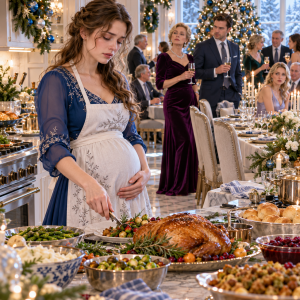
The Sunday Everything Changed

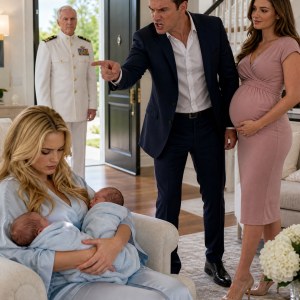
The evening my mother struck my six-year-old son, every person seated around her polished dining table looked away.
Some lowered their eyes toward their plates, while others suddenly became interested in the candles or the serving dishes, as though ignoring what had happened might make it disappear. My sister even pulled her own child closer and comforted him, although he had been the one who snatched the toy from my son’s hands.
For most of my life, silence had been my family’s favorite form of loyalty. That night, I finally understood what it cost.
My name is Natalie Bennett, and my relatives believed they knew exactly who I was: the widowed daughter who had returned to Connecticut with one suitcase, a small child, and very little to show for her life. They thought I worked an ordinary administrative job and struggled to pay my bills.
I allowed them to believe it.
What they did not know was that, after my husband, Andrew, passed away in a highway incident four years earlier, I had turned a small medical-distribution venture into Northstar Health Logistics, a private corporation valued at several billion dollars. Only my closest advisers knew that I controlled it. My name had been carefully kept away from public documents, and my family had never bothered to ask many questions.
They preferred a version of me they could pity.
That Sunday, my son, Owen, was sitting near the fireplace, rolling a green metal truck across the floor. Andrew had given him an identical truck shortly before we lost him, and when the original vanished during one of our visits to my mother’s house, I spent months finding another.
To Owen, it was more than a toy. It was a bridge to the father he remembered mostly through photographs.
My sister Meredith’s nine-year-old son, Connor, walked over and took it without asking.
“I wasn’t finished,” Owen said, reaching for it.
Before he could touch Connor, my mother, Lorraine, rose and struck Owen across the side of his face.
The sound silenced the room.
Owen stumbled backward, pressing one hand near his ear. His expression held more confusion than pain, as if he were trying to understand which rule he had broken.
Meredith wrapped her arms around Connor.
“Did he frighten you?” she asked.
My mother turned to me with the cold authority she had used throughout my childhood.
“Teach that child to behave, Natalie.”
She rarely called Owen her grandson. Usually, he was simply “that child,” while Connor was praised, protected, and forgiven before he had even apologized.
When Owen lowered his hand, I saw a small scrape near his ear. Around the table, excuses began arriving before concern did.
“Lorraine barely touched him.”
“Don’t turn this into a scene.”
“Dinner is getting cold.”
For years, I had swallowed remarks that hurt me because I thought endurance was the price of remaining part of the family. But when I looked at Owen, holding back his tears because he had already learned that crying only annoyed them, something inside me became quiet and certain.
I lifted him into my arms.
“Where are you going?” my mother demanded.
“To have him examined.”
She gave a dismissive laugh.
“Because of one little smack?”
I walked out without answering.
During the drive to the clinic, Owen leaned against the passenger door and asked the question no child should have to ask.
“Mom, was I bad?”
I pulled into a parking lot, turned toward him, and gently held his hands.
“No. Connor took something that belonged to you, and you tried to get it back. You did nothing that deserved what happened.”
He stared at his shoes.
“Grandma says I make trouble.”
“Grandma was wrong.”
It was the first time I had said those words aloud.
It would not be the last.
What Owen Had Been Hiding
The pediatric physician, Dr. Elaine Foster, examined Owen carefully, explained each step before touching him, and spoke with the kind of patience that made children feel safe.
After confirming that his injury was minor but needed documentation, she pulled a chair close to him.
“Owen, has someone in your grandmother’s house treated you this way before?”
He glanced at me, waiting for the answer he thought I wanted.
My first instinct was the one my family had trained into me—to soften, excuse, and protect. Then I remembered the way everyone at the table had protected themselves instead of my son.
I nodded.
“You can tell her the truth.”
Owen twisted the edge of his sweater between his fingers.
“Grandma gets mad when I ask about Dad.”
Dr. Foster kept her voice gentle.
“What does she do when she gets mad?”
“She makes me sit in the pantry.”
I felt the room shift beneath me.
My mother’s kitchen had a narrow pantry beside the refrigerator. During earlier gatherings, I had occasionally found Owen sitting inside with a flashlight. Lorraine always said he was pretending to explore a cave.
“Does she close the door?” the doctor asked.
Owen nodded.
“Sometimes Aunt Meredith does it.”
“How long do you stay there?”
“Until I promise not to ask questions.”
“Questions about your father?”