Part 1: The Baby Beneath My Graduation Gown
The ridicule began before the announcer finished reading my name.
By the time I stepped toward the graduation platform carrying a sleeping newborn against my chest, several people in the auditorium had already decided I represented a public embarrassment.
Someone seated behind the graduates whispered loudly enough for me to hear.
“She turned out exactly like the woman who gave birth to her.”
I tightened my arm around baby Eli and continued walking.
My name is Grace Bennett, and that morning I was twenty-two years old, graduating as valedictorian from a social-work program at a university in Columbus, Ohio. I was also an orphan who had spent sixteen years hearing that people like me should remain grateful for whatever leftovers reached them.
The loudest laughter came from my aunt, Patricia Bennett, who became my guardian after my parents passed away. She reminded me constantly that every meal, bedroom, school uniform, and medical appointment created a debt I could never repay.
Beside her sat my cousin Madison, wearing the white academic honor stole that should have rested across my shoulders. She had obtained it after a fabricated disciplinary accusation temporarily placed my graduation under investigation.
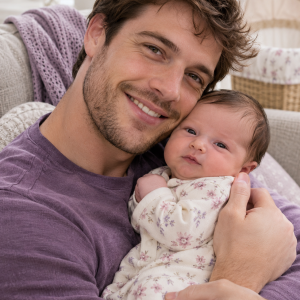
Three weeks before the ceremony, I found Eli outside a neighborhood medical clinic where I completed fieldwork. He had been left inside a clean cardboard carrier, wrapped securely in a hospital blanket. His mother had experienced serious complications after childbirth and had not survived, while no relative or identifiable father immediately appeared.
A social worker at the clinic explained what would happen next.
“He will enter emergency foster placement while we search for a suitable relative. You have done everything required by bringing him inside safely.”
I looked at his fingers curling around mine and remembered myself at six years old, sitting inside a county office while adults argued about who would be forced to accept responsibility for me.
“I have completed certified foster-care training through my social-work degree,” I said. “Please consider me for temporary placement while the investigation continues.”
After background checks, a home assessment, and emergency judicial review, I received temporary guardianship under professional supervision.
Patricia described my decision as theatrical attention-seeking. Madison called Eli “discarded trouble collected by someone who understood garbage.”
Then their interference became more dangerous.
A formal complaint accused me of plagiarizing my capstone research and behaving irresponsibly by bringing an unrelated infant onto campus. My scholarship reimbursement was suspended, my honor designation was removed, and my degree entered administrative review.
Madison’s boyfriend, Tyler Grant, worked inside the university registrar’s office and possessed access to academic records. At first, nobody considered that connection suspicious.
Patricia smiled after learning my graduation might be withheld.
“Skip the ceremony and preserve whatever dignity you still possess. Everyone already knows your little rescue performance cannot hide what you are.”
She did not know that I had volunteered for two years at a legal-aid clinic, where attorneys taught me how signatures, access histories, and financial trails could expose misconduct hidden behind respectable titles.
My capstone project was not ordinary classroom research. It examined why academically qualified students with foster-care histories repeatedly lost scholarships after review, while wealthier applicants with weaker records received funding.
The evidence indicated changed rankings, disappearing recommendations, invented conduct reports, and donor money redirected through false accounts.
Every trail eventually connected to Tyler, Madison, and an associate dean with authority over scholarship administration.
I walked toward the platform carrying Eli because I refused to hide the person they wanted to use as evidence against me.
University President Samuel Whitaker rose from his chair while laughter still moved through the auditorium.
He raised one hand toward the audience.
“Before Grace Bennett receives her degree, this university owes her a public apology.”
The room became completely silent.
Part 2: The Apology From The Stage
President Whitaker approached the microphone while I remained beneath the stage lights, with Eli sleeping against my graduation gown.
“Ms. Bennett was not found responsible for academic dishonesty,” he announced. “She was the student whose research uncovered it.”
A stunned murmur spread across the auditorium. Madison’s smile disappeared, while Tyler shifted abruptly in his seat near the registrar’s staff.
President Whitaker continued.
“Her capstone investigation exposed coordinated manipulation of scholarship rankings, fabricated disciplinary complaints, altered academic records, and the misappropriation of more than two hundred thirty thousand dollars from restricted donor funds.”
Tyler stood and pointed toward the stage.
“This announcement is irresponsible because she accessed private records without authorization.”
Two campus security officers stepped into the aisle before he could move farther.
Patricia gripped Madison’s wrist.
“Remain seated and stop drawing attention to yourself.”
I watched them with the calmness they had always interpreted as weakness.
The investigation began six months earlier when I recognized a recurring pattern. Students who had lived in foster care achieved excellent grades, submitted strong recommendations, and ranked highly during preliminary scholarship reviews. After the committee finalized awards, several lost funding to students with weaker academic records and influential families.
Document timestamps did not match scheduled review dates. Recommendation letters disappeared after submission, while disciplinary reports appeared without corresponding interviews or notices.
My volunteer work inside the university archives taught me how to retrieve permitted document histories. I preserved access logs, approval codes, scholarship revisions, and publicly available financial reports without entering restricted systems.
When my own funding was suspended, I understood that somebody realized how close my research had come to identifying the scheme.
They did not know I had already delivered encrypted copies to President Whitaker, the state education inspector, and financial investigators. An attorney at the legal-aid clinic authenticated the records and created a proper evidence log.
Madison rose despite Patricia’s grip.
“Grace has always been obsessed with competing against me. She invented these allegations because she cannot tolerate my success.”
I turned toward her.
“Which part inspired jealousy, Madison—the grades Tyler changed or the donor money redirected through accounts connected to you?”
Her mouth opened without producing an answer.
President Whitaker raised a folder containing security reports.
“Video records also show Tyler Grant entering the registrar’s restricted archive after midnight using Associate Dean Warren’s credentials. During that access period, Grace Bennett’s capstone submission and disciplinary file were modified.”
Associate Dean Malcolm Warren stood near a side aisle and attempted to leave through an auxiliary door. Two investigators waiting outside entered before he reached it.
Parents began standing, graduates lifted telephones, and donors exchanged alarmed questions. A large screen behind the platform displayed a carefully prepared timeline of altered rankings, transfers into shell accounts, fabricated complaints, and messages between Madison and Tyler.
One message appeared in enlarged form:
“Once Grace loses eligibility, her scholarship allocation becomes yours.”
Madison stared at me.
“You planned this public humiliation from the beginning.”
“I documented what you planned, but I did not create your messages, transfers, or unauthorized access.”
Patricia rushed into the aisle.
“You ungrateful parasite! We sacrificed everything to raise you, and this is how you repay your family?”
President Whitaker waited until security blocked her path.
“Mrs. Bennett, the financial investigation also examined survivor benefits issued after Grace’s parents passed away. Approximately eighty-six thousand dollars intended for Grace’s care was transferred into accounts connected to you.”
My knees nearly weakened.
I expected academic fraud and cruelty, but I had never known Patricia had stolen the money she cited whenever claiming that supporting me had impoverished her.
For the first time in sixteen years, fear replaced superiority in my aunt’s eyes.
Part 3: What My Guardian Had Taken