GLAS Video Moral Stories

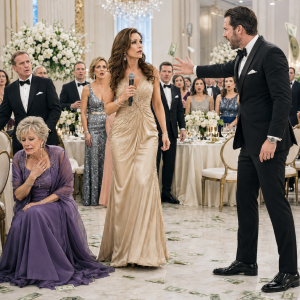
My Husband Placed A $42 Million Divorce Agreement Beside My Untouched Dinner And Proudly Announced That His Pregnant Former Assistant Was Carrying Twin Boys. I Signed Every Page, Left My Wedding Ring On Top, Then Revealed The Pregnancy He Had Abandoned Without Ever Knowing It Existed.

Part 1: The Dinner Where My Marriage Became A Transaction

My husband placed a forty-two-million-dollar divorce agreement beside the dinner I had not touched and announced that his girlfriend was carrying twin boys.

We were seated inside the formal dining room of our townhouse in Boston’s Back Bay, beneath a bronze chandelier I had selected during a renovation nine years earlier. Outside the tall windows, November rain darkened the brick sidewalks while passing headlights reflected across the glass.

Inside, three people waited for me to react.

My husband, Harrison Vale, sat opposite me wearing a charcoal suit and the controlled expression he used during hostile corporate negotiations. His mother, Lorraine Vale, occupied the chair at the head of the table, as she had during every important family meal throughout our twelve-year marriage.

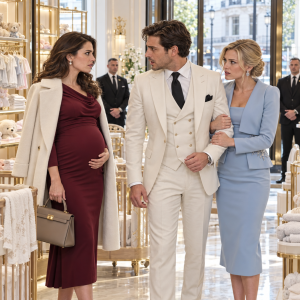
Near the fireplace stood Paige Sutton, Harrison’s twenty-six-year-old former executive assistant. Her cream maternity dress revealed a pregnancy approaching its final trimester, while one hand remained positioned protectively beneath her stomach.

Harrison pushed the agreement closer.

“Paige is carrying two boys, and they need to be born into a legally stable family.”

My name is Amelia Hartley, and at thirty-eight I had spent most of my adult life designing luxury retail spaces, managing charitable galas, and supporting the public image of Vale Meridian, the international jewelry company Harrison inherited from his grandfather.

I had also spent seven years enduring fertility treatments that left my body bruised, swollen, exhausted, and repeatedly disappointed.

Lorraine tapped one manicured finger against the agreement.

“You should regard this as an exceptionally generous resolution, Amelia. Most women in your position would receive considerably less.”

“What position would that be?”

Her gaze moved toward my abdomen.

“The position of a wife who failed to secure the next generation.”

Harrison lowered his eyes but did not defend me.

That silence had defined our marriage more accurately than any vow. Whenever Lorraine criticized my body, questioned my usefulness, or humiliated me during family gatherings, Harrison described himself as someone who disliked confrontation.

Apparently, an eighteen-month relationship with his assistant had felt less confrontational.

Paige shifted uneasily.

“I never intended to cause this much pain.”

A sapphire-and-diamond bracelet circled her wrist. Harrison had given it to me on my thirty-fourth birthday, then claimed it had disappeared while our home was being photographed for a magazine.

I had searched drawers, safes, luggage, and jewelry cases before accepting that perhaps I had misplaced it during another exhausting round of treatment.

Now it glittered beneath Paige’s hand.

I looked directly at Harrison.

“Did you give her my bracelet before or after she became pregnant?”

His jaw tightened.

“That detail is irrelevant.”

“It became relevant when you allowed me to believe I had lost it.”

Lorraine released an impatient breath.

“Enough melodrama. Paige is carrying high-risk twins, and stress is dangerous for the children.”

For years, my medical pain had been treated as an inconvenience. Paige’s discomfort had already become a family emergency.

Harrison opened the agreement to the signature page.

“The payment will transfer immediately. You will resign from the Vale Meridian board, waive future claims against the company, surrender your interest in this townhouse, and refrain from discussing private medical or marital matters publicly.”

“What happens if I refuse?”

His voice became colder.

“Then the divorce becomes contested. The press will examine every treatment, procedure, failed implantation, and emotional episode connected to your fertility history.”

It was not regret.

It was a threat delivered in professional language.

I picked up the pen.

Harrison blinked.

“You should read everything carefully.”

“My attorney reviewed it yesterday.”

For the first time that evening, uncertainty appeared on his face.

I signed every marked page without asking for a reduced payment, additional property, or another opportunity to repair a marriage that had already been abandoned.

Then I removed my wedding ring and placed it on the agreement.

Lorraine leaned forward to inspect my signature.

“At least you finally understand reality.”

I rose and collected my handbag.

Paige looked surprised. Harrison looked almost disappointed, as though he had expected tears, shouting, or a final attempt to prove that he still mattered enough to break me publicly.

“My luggage is already downstairs,” I said.

“You packed before dinner?” Harrison asked.

“I packed four days ago.”

His expression changed because he finally understood that he had not dismissed me from his life.

I had been waiting for written permission to leave it.

At the doorway, Lorraine spoke again.

“Forty-two million dollars is more than enough compensation for twelve comfortable years.”

I turned back toward the table.

“Comfortable?”

The word remained suspended beneath the chandelier.

“Was it comfortable when I woke after surgery and discovered Harrison had sent a driver because a board dinner mattered more than my discharge? Was it comfortable when you called my body defective during Thanksgiving? Was it comfortable when I miscarried alone in a hospital restroom while your son was attending a conference with Paige?”

Harrison became completely still.

“What miscarriage?”

I looked directly at him.

“The pregnancy you never asked enough questions to discover.”

Then I left the house.

Part 2: The Truth I Sent From The Airport

Cold rain struck my face while I crossed the courtyard toward the waiting car. From the sidewalk, the townhouse looked warm, elegant, and perfectly peaceful.

That was the Vale family’s greatest talent.

They could make cruelty appear expensive.

Before the vehicle reached Logan International Airport, Harrison had called seven times. By the time I passed security, the number had reached nineteen.

I ignored every call until the final boarding announcement.

Then I sent one message.

The fourth embryo transfer succeeded. At eight weeks, there was a heartbeat.

Genetic testing later showed that your chromosomal abnormality contributed significantly to the loss, but I never blamed you because I knew your mother would humiliate you if she learned the truth.

I miscarried while you were sharing a hotel suite with Paige in Philadelphia.

The forty-two million dollars is not compensation for twelve years of marriage. It is the debt you owe the child you abandoned before learning that child existed.

I turned off my phone and boarded a flight to Seattle.

When the plane landed, forty-six missed calls and thirty-three messages appeared on the screen.

The final message came from Harrison.

AMELIA, PLEASE COME BACK. I DID NOT KNOW.

Another message arrived immediately afterward.

It came from Lorraine.

RETURN THE MONEY OR RETURN TO THIS FAMILY. PAIGE MAY LOSE ONE OF THE TWINS, AND HARRISON STILL NEEDS A SECURE HEIR.

I stared at those words while travelers moved around me.

Even after learning about the child I lost, Lorraine’s concern remained focused upon succession.

Someone gently took the handle of my suitcase.

I looked up.

Elliot Mason stood beside me holding two coffees and wearing an old navy peacoat. He had silver beginning at his temples, the same patient eyes I remembered from graduate school, and a restrained smile that asked nothing from me.

“You kept me waiting,” he said.

I had not seen him in sixteen years.

Elliot and I had studied architecture at Cornell. He was a graduate teaching assistant when I was completing my final undergraduate year, and he once spent an entire night helping me rebuild a museum model after a pipe burst inside the studio.

We became close, but Harrison entered my life before that friendship had time to become anything else. He arrived with certainty, wealth, and a future that seemed completely designed.

Elliot accepted a position in Seattle.

I married Harrison.

Over time, Elliot and I became occasional birthday messages and names appearing beneath professional announcements.

Six months before the divorce dinner, I called him after leaving a fertility clinic alone. I expected to speak for several minutes. Instead, he listened for nearly two hours without interrupting.

When I admitted that I might finally leave Harrison, Elliot gave me one answer.

“When that day comes, call me. I will be there.”

He had kept his promise.

Part 3: The Life That Did Not Require Permission

Elliot arranged a furnished apartment for me near Alki Beach, where the windows overlooked Puget Sound and ferry lights moved across the dark water after sunset.

The refrigerator contained groceries, the bed had clean linens, and yellow roses stood beside the kitchen sink.

“You remembered,” I said.

“I remember more than is probably useful.”

During my first weeks in Seattle, Harrison sent apologies every few hours. He apologized for missing appointments, allowing Lorraine to insult me, giving my jewelry to Paige, and assuming our marriage remained stable because I rarely complained.

That final explanation revealed everything.

My silence had been so convenient that he mistook it for happiness.

I did not respond.

Then he sent an ultrasound image of the twins. One baby measured smaller than the other, and Paige had been ordered to remain on strict bed rest because of placental complications.

Harrison wrote:

Were your appointments this frightening? Were you always afraid when you went alone?

He needed another woman’s dangerous pregnancy before he could imagine mine.

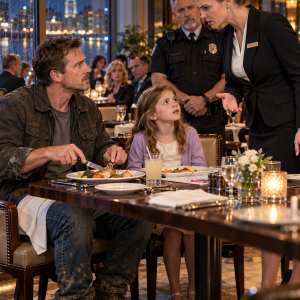
Three weeks later, Lorraine flew across the country and found me at a waterfront restaurant near Elliott Bay, where Elliot and I were discussing plans for an independent design studio.

She wore a bright red coat and opened both arms as though we were reuniting affectionately.

“Amelia, my dear girl.”

I remained seated.

“I stopped being your dear girl when your attorneys finalized the divorce.”

Her smile tightened.

Elliot stood, but I touched his wrist.

“I can handle this.”

He moved to another table, close enough to see me but far enough to allow privacy.

Lorraine sat without invitation.

“Harrison is falling apart. He barely eats, sleeps at his office, and says the townhouse feels empty.”

“He should discuss that with his therapist.”

“Do not be cruel. He made a mistake.”
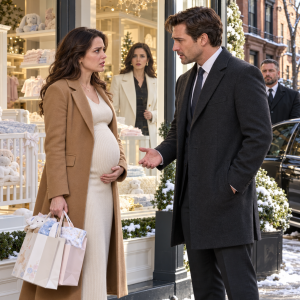
“An affair lasting eighteen months required scheduling, secrecy, gifts, travel, and repeated choices.”

She leaned closer.

“Paige may lose one of the babies.”

I waited.

Lorraine looked toward the harbor before lowering her voice.

“If something happens, Harrison may not have a healthy heir.”

There it was.

The reason she had crossed the country.

“You want me to return as a reproductive backup plan.”

“That is an offensive interpretation.”

“It is an accurate one.”

She reached toward my hand.

I withdrew it.

“Now that we know you became pregnant once, perhaps another treatment could succeed.”

“We also know Harrison’s genetic condition contributed to the miscarriage.”

Her expression changed briefly.

She already knew.

“You read the report,” I said.

Lorraine looked away.

“The clinic mailed a copy to the townhouse.”

“You hid it.”

“I protected my son.”

“You protected his pride by allowing me to believe my body had killed our child.”

“The truth would have damaged his confidence.”

“So you destroyed mine instead.”

For once, Lorraine had no immediate reply.

I rose and picked up my bag.

“Paige is not your solution. I am not your solution. Children are not evidence that the Vale family deserves to continue.”

Her face hardened.

“You accepted forty-two million dollars.”

“Harrison offered it because he believed money could purchase silence. I accepted because twelve years taught me never to refuse the only honest thing a Vale placed in my hands.”

I walked away.

Near the pier, Elliot approached and wrapped his coat around my shoulders, although the afternoon was not particularly cold.

“My hands are shaking,” I admitted.

“You do not have to perform strength every minute.”

That evening, shortly after midnight, Paige called me from the hospital.

Machines sounded behind her, and she was trying not to cry.

“Amelia, I need to ask you something.”

“What is it?”

“When you lost your baby, did it hurt?”

Part 4: The Woman Who Thought She Had Won

I sat upright in bed.

Moonlight stretched across the apartment floor.

“Yes,” I answered. “It hurt physically and emotionally.”

“What about the injections?”

“Those hurt too.”

“Lorraine says I caused the complications because I refused to remain still enough.”

“Stop listening to Lorraine and follow your medical team.”

Paige remained silent.

Then she asked:

“Do you hate me?”

I considered the truth carefully.

“I hate what you did. I hate that you accepted my bracelet, entered my home, participated in that dinner, and watched me sign those papers as though you had won something.”

Her breathing became uneven.

“I thought I had won.”

“I know.”

I looked through the window toward the dark water.

“You did not win Harrison. You inherited the responsibilities he left unfinished.”

Paige began crying.

“He is not cruel all the time.”

“He does not need to be cruel constantly to leave you alone when courage becomes inconvenient. When his mother attacked me, he disappeared. When treatment became painful, he worked longer. When our child died, he chose another woman because facing grief threatened his self-image.”

“What should I do?”

“Protect your children. Protect your finances. Keep access to your own accounts and legal documents. Remember that you were a person before becoming Harrison’s girlfriend, and you will remain one if his family stops approving of you.”

Before ending the call, Paige whispered:

“I am sorry.”

I did not forgive her.

However, I believed she finally understood what she had entered.

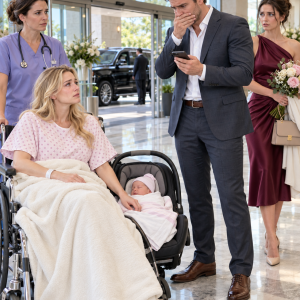
Two months later, she delivered twin boys by emergency cesarean section. Oliver weighed just over four pounds, while Jacob weighed less than three and required respiratory support.

Harrison spent the night outside the neonatal intensive care unit, staring through the glass at a son he was afraid to touch.

Lorraine blamed Paige until a nurse ordered her to leave the floor.

Harrison sent me one message.

Now I understand what you meant when you said you had no family at the hospital. I am surrounded by people, yet I have never felt more alone.

I replied once.

Then make sure Paige is not alone.

After that, his messages became less romantic and more honest. He stopped begging me to return. Instead, he described therapy, pediatric appointments, sleepless nights, and his attempts to establish boundaries with Lorraine.

None of that repaired our marriage.

Perhaps it would help his children.

Part 5: The Studio That Belonged Entirely To Me

Elliot introduced me to a retired couple who owned a vacant storefront in Seattle’s Pioneer Square. The building had exposed brick, worn floors, outdated wiring, and windows tall enough to fill the interior with natural light.

I loved it immediately.

Using part of the settlement, I opened Hartley Spatial Studio, specializing in intimate hotels, restaurants, boutiques, and homes designed around accessibility, emotional comfort, and natural movement.

Elliot helped develop the renovation plans but refused payment.

“Then accept equity,” I said.

“No.”

“Why not?”

“Because this place should belong entirely to you.”

His answer reached a part of me that had spent years confusing partnership with surrender.

Months later, I found an old photograph inside his home office. I was twenty-two, sitting outside Cornell’s architecture building while Elliot held an umbrella over me and allowed his own shoulder to become soaked.

“You kept this photograph?”

He looked embarrassed.

“I forgot it was there.”

“The envelope says Amelia, April 2009.”

“Fine. I remembered.”

I studied the way his younger self had looked at me.

“Were you in love with me?”

He leaned against the desk.

“Would the answer create another burden?”

“I do not know.”

“Then I will not use it that way.”

“That is not an answer.”

His smile became sad.

“Yes, Amelia. I loved you. Then you married someone else, so I learned to care from a respectful distance.”

“What about now?”

“Now you are rebuilding. I will not turn your freedom into another obligation.”

I reached for his hand.

“I do not know what I can offer.”

“I am not asking for anything.”

“That somehow feels more frightening.”

“It should feel safer.”

By spring, my studio had four clients, including a restaurant renovation, a waterfront residence, and a jewelry boutique project referred through Paige.

Her email remained strictly professional, containing measurements, budgets, and deadlines without personal appeals.

I accepted because the contract suited my firm, not because forgiveness had suddenly become necessary.

Then a national television program invited me to discuss divorce, reproductive loss, and rebuilding a career after emotional coercion.

The producer described the intended interview clearly.

“This is not the story of an abandoned wife. It is the story of a woman who stopped permitting other people to define her.”

The recording would take place in New York.

When I told Elliot, he placed dinner before me and asked:

“Are you ready to return?”

“I am not certain.”

“That was not my question.”

He was right.

Avoiding a city and choosing to return were entirely different acts.

“I am ready,” I said.

The following morning, a letter arrived from Paige.

She warned me that Harrison intended to meet me after the interview and admitted there was one truth he had never revealed.

Harrison had known about our lost pregnancy before the affair began.

Part 6: The Confession He Could No Longer Avoid

Paige’s letter explained that Lorraine confronted Harrison with the genetic report after a corporate celebration in Philadelphia.

He learned that our embryo had developed a heartbeat, that the pregnancy ended, and that his chromosomal abnormality had contributed significantly to the loss.

Instead of coming home, he became drunk and went to Paige’s hotel room.

The affair began that night.

Harrison had not merely failed to ask questions after the miscarriage.

He had known enough to understand my grief and chose another woman because facing me would have forced him to face himself.

After the television interview, I found him waiting beside a black sedan outside the studio.

He had lost weight, and exhaustion hollowed the skin beneath his eyes.

“Amelia.”

I stopped several steps away.

“You knew.”

His face collapsed.

“Paige told you.”

“You knew about the heartbeat before you asked me for a divorce.”

“I learned the night the affair began.”

“Then you went to her instead of coming home.”

“I was ashamed.”

“So you punished me for your shame.”

He looked downward.

“I thought if Paige gave me healthy children, it would prove I was not defective.”

“And when her pregnancy became dangerous?”

“I finally understood that children are not evidence of a man’s worth.”

Traffic moved behind him while evening light reflected across nearby buildings.

“I loved you,” he said.

“You loved the peace I created around you. You loved that I managed your mother, your social obligations, your house, and your reputation. Whenever loving me required discomfort, you disappeared.”

Tears gathered in his eyes.

“Can you forgive me?”

“I can stop carrying hatred. That does not mean reopening the door.”

“Is there someone else?”

I thought about Elliot waiting in Seattle without checking my schedule every ten minutes or demanding reassurance.

“There is someone who understood how to stand beside me before I understood that I deserved it.”

Harrison closed his eyes.

“What happens now?”

“You protect Paige from your mother. You raise your sons. You attend therapy after the difficult appointments instead of messaging me whenever responsibility becomes painful.”

“What about us?”

“There is no us.”

I raised my hand for a taxi.

Before entering, I looked back once.

“The forty-two million dollars was never why I left. I left because you believed I could be purchased and removed.”

The taxi moved into traffic.

Harrison remained beside the sedan until the city disappeared behind me.

Part 7: The Public Truth That Came Eleven Years Late

Three months after my interview aired, Lorraine accused me of extorting the settlement from the Vale family.

She made the claim loudly during a charity dinner, ensuring that journalists heard her version before legal counsel could intervene.

By morning, several websites were calling me the most expensive former wife in Boston.

My attorney recommended a defamation suit.

I declined.

“The agreement is signed, witnessed, and financially documented. Facts do not need spectacle.”

Harrison disagreed.

During Vale Meridian’s annual shareholder meeting, a reporter asked whether corporate funds had been misused to pay my settlement.

Harrison stood behind the podium while Lorraine watched from the front row, expecting him to defend the family name as he had throughout his life.

Instead, he looked into the cameras.

“Amelia Hartley did not steal or extort anything,” he said. “I proposed the settlement after maintaining an eighteen-month relationship with an employee, withholding relevant medical information from my wife, and permitting my family to blame her for fertility losses that were not solely connected to her health.”

The room became silent.

Lorraine stood.

“Harrison, stop immediately.”

He continued.

“My former wife endured treatments, surgery, and miscarriage without my support. I wanted a quick divorce before my girlfriend delivered twins, so I offered forty-two million dollars and required Amelia to leave quietly. She accepted the agreement I created and complied with every legal term.”

Lorraine moved toward the stage.

Security stopped her before she reached the microphone.

Harrison faced her.

“My mother received the genetic report before I did and concealed it because preserving my confidence mattered more to her than protecting my wife.”

The entire confession was broadcast live.

A reporter shouted:

“Do you still want your former wife back?”

Harrison gripped the podium.

“Yes. However, wanting someone does not create ownership or entitlement.”

Then he left the stage.

His confession damaged Vale Meridian temporarily, but it prevented a deeper financial inquiry and ended Lorraine’s social authority within the company’s charitable network.

For the first time, Harrison chose the truth instead of his mother.

He was only eleven years late.

Part 8: The Home Where Nobody Had To Disappear

Hartley Spatial Studio expanded from one employee to six within two years. We opened a larger workspace overlooking Elliott Bay, completed projects across Seattle and Portland, and created paid fellowships for young women entering architecture after interrupted education or economic dependence.

The settlement began as an attempt to erase me.

I used it to create employment, healthcare, and visible opportunities for other women.

Harrison founded a small support program for patients attending fertility procedures alone. He named it the James Companion Fund after I finally told him the private name I had given our lost child.

At my request, he used only James.

No family surname appeared.

The program funded transportation, postoperative assistance, counseling, and volunteers who remained with patients until someone trusted could arrive.

Harrison never invited journalists.

That quietness made the work more credible.

Elliot remained near without turning patience into leverage. Six months after my return from New York, we were walking along Alki Beach when he reminded me that the period of time I had requested had ended.

“Are you asking whether you may love me openly?” I asked.

“Yes, although I prepared several less intimidating versions.”

“You may.”

“Is that a cautious beginning?”

I smiled.

“It is a complete beginning.”

He kissed me only after giving me time to step away.

I remained.

Two years later, Elliot proposed on the steps outside Cornell’s architecture building, where our old photograph had been taken.

He did not ask me to belong to him.

“Can we continue belonging beside each other?” he asked.

“Yes.”

We married the following spring in my parents’ backyard outside Providence. There were forty-three guests, simple flowers, folding chairs, and no elaborate family empire waiting to decide where anyone belonged.

During his vows, Elliot spoke calmly.

“I cannot promise a life without pain. I can promise that you will never need to reduce your pain to protect my comfort.”

My response came through tears.

“I promise never to disappear inside love again.”

Near sunset, I checked my phone beneath a maple tree.

One final message from Harrison remained unread.

The boys are healthy. The James Fund assisted its thousandth patient today. I heard you were married. I will not contact you again. You were right about the settlement. It represented a debt, although no amount could ever become enough. Please be happy, Amelia.

I read the message once.

Then I deleted the conversation.

Not angrily.

Not triumphantly.

The story had simply reached its ending.

Elliot approached and placed his jacket around my shoulders.

“You disappeared for five minutes.”

“I returned.”

Across the yard, my parents laughed with our friends while music drifted from the open windows. Someone called us back toward the dance floor.

For years, I believed a beautiful house proved that the life inside it was beautiful. I had been wrong.

A home was not a chandelier, historic brick, inherited jewelry, or a prestigious surname.

A home was the place where nobody required you to vanish so everyone else could remain comfortable.

Harrison paid forty-two million dollars because he expected me to leave quietly.

Instead, I used the money to build a life too honest to remain silent.

The greatest surprise was never Paige’s pregnancy, Lorraine’s desperation, or Harrison’s eventual confession.

It was discovering that after years of being called incomplete, I had never been missing anything essential.

I took Elliot’s hand.

Together, we returned to the light.

THE END

Related Posts

My Daughter Humiliated Me in a Crowded Grocery Store and Demanded I Pay $1,896 for Her Luxury Dinner Because I “Lived Under Her Roof”—But She Forgot I Had Funded the House, Paid Every Bill, and That She Could Lose Her Mother Forever

The Note Beside the Coffee Pot Every morning at six fifteen, I made coffee in my daughter Brenda’s kitchen. While it brewed, I packed lunches for my grandchildren,...

My Wealthy In-Laws Flew Overseas After Leaving Me Alone to Care for My Unconscious Husband—They Had Already Prepared Medical Records to Blame Me and Take Control of His Company, But at Exactly 12:17 A.M., He Opened His Eyes and Whispered the One Secret That Brought Their Entire Plan Crashing Down

The Warning Before They Left “If something happens to Reid while we’re gone, everyone will know you were responsible.” Lenora Calder delivered the warning as calmly as if...

Every Sunday My Husband Sent Me a New Photo of My Elderly Mother Smiling by the Living Room Window While I Worked on a Caribbean Cruise—Then I Saw One Small Detail That Shouldn’t Have Been There, Bought the First Ticket Home, and Discovered That Some Families Don’t Fall Apart Overnight… They Fall Apart One Carefully Kept Secret at a Time.

The Photograph That Never Changed The morning I decided to come home, I was polishing a brass handrail outside the ship’s breakfast lounge. The Caribbean was flat and...

After Spending Five Years Supporting His Wife’s Entire Family, He Returned Home to Find They Had Locked Her Helpless Grandfather Alone Before Leaving for a Luxury Vacation—But the Old Man Suddenly Revealed He Had Been Pretending to Be Paralyzed for Two Years to Test Them, Exposing His Granddaughter’s Affair, Her Plot to Steal the Family Fortune, and the Betrayal That Changed Everything

The Note Waiting on the Kitchen Table After five years of working overtime to support his wife’s entire family, Warren Pike returned home expecting nothing more than a...

“You Don’t Look Like Someone Who Belongs In The Presidential Suite,” The Assistant Manager Said. He Looked At My Canvas Sneakers, Mocked My Reservation, Dropped My Titanium Access Card Onto The Marble Floor, And Deliberately Stepped On It In Front Of The Entire Hotel Lobby. Nine Minutes Later, Those Same Guests Learned Why My Name Was Attached To The Very Hotel Where He Worked.

Part 1: The Reservation At The End Of A Long Flight The first employee who looked directly at me decided I did not belong inside the hotel before...

Để lại một bình luận

Email của bạn sẽ không được hiển thị công khai. Các trường bắt buộc được đánh dấu *