GLAS Video Moral Stories

I Returned Home Early And Found My Husband’s Mistress Wearing My Late Mother’s Concert Gown Beside Her Piano. My Husband Said, This Is Not What It Looks Like. Then His Mistress Handed Him A Three-Point-Six-Million-Dollar Transfer Bearing My Forged Signature.

Part 1 – The Woman Wearing My Mother’s Dress

The moment I saw my husband’s mistress touching my mother’s concert piano, I stopped asking whether my marriage could still be saved.

A winter storm pressed against the windows of our Milwaukee lakefront mansion, rattling the glass and covering the gardens with wet snow. I had returned unexpectedly from a charity dinner in Madison after the keynote speaker canceled. My husband, Harrison Caldwell, believed I would remain away until midnight.

Instead, I entered our music room shortly after nine and found his executive assistant, Bianca Shaw, sitting at the restored mahogany piano my mother had played before cancer weakened her hands.

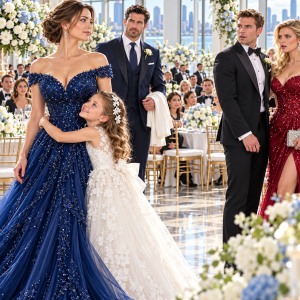
Bianca was wearing my midnight-blue concert gown.

The dress had belonged to my mother before she gave it to me for my first professional recital. Its hem had been altered by hand, and one interior seam still carried a small embroidered letter M.

Bianca’s diamond bracelet scraped against the polished wood while she pressed random keys and laughed.

Harrison stood beside the fireplace holding two champagne glasses. His mother, Margaret Caldwell, watched from a nearby chair without appearing surprised.

Nobody moved when I entered.

Bianca slowly removed her hands from the piano.

“Elena, you were supposed to be in Madison.”

“Apparently, that misunderstanding was useful.”

Harrison set down the glasses.

“This is not what it looks like.”

I looked at Bianca’s bare feet, my gown, the champagne, and the overnight bag beside the sofa.

“Then explain what appearance you were attempting to create.”

Margaret rose first.

“Lower your voice. The staff can hear everything.”

Her concern for the staff’s opinion told me more than Harrison’s denial.

For eight years, I had served as the gracious wife of the chief executive of Caldwell Resort Group. I arranged investor dinners, managed philanthropic events, entertained political donors, remembered allergies, repaired family disputes, and abandoned nearly every performance opportunity because Harrison’s calendar was always described as more important.

Before our marriage, I taught piano, composed chamber music, and performed throughout Wisconsin and Illinois. Harrison once called my music the first place where he felt peaceful.

After the wedding, he began asking me not to practice during business calls.

Then he scheduled receptions on performance nights.

Eventually, he referred to music as a beautiful hobby that no longer suited our responsibilities.

I crossed the room and closed the piano lid before Bianca could touch another key.

“Take off my dress.”

Her expression hardened.

“Harrison said you never wore it anymore.”

“My husband does not own my clothing, my piano, or the history attached to either one.”

Harrison approached.

“Elena, Bianca came here because we needed to discuss an urgent company situation.”

“Did that discussion require my mother’s gown?”

Margaret intervened.

“Harrison intended to end the relationship tonight. Bianca became emotional, and everyone handled the circumstances badly.”

I turned toward her.

“You knew about them.”

She did not answer.

Silence confirmed that this betrayal had been incorporated into the household long before I walked through the door.

I went upstairs, removed a suitcase from the closet, and packed identification, medication, personal documents, several sweaters, and the notebooks containing my unfinished compositions.

Harrison followed me.

“Do not make a permanent decision during an emotional moment.”

“The affair lasted eleven months. The decision belongs to the pattern, not the moment.”

He blocked the doorway without touching me.

“We have built too much together for you to walk away.”

“You built a company while I built the version of you everyone trusted.”

He flinched.

I carried the suitcase downstairs.

Bianca had changed into her black dress, but she remained near the piano holding a folded document.

“Before you leave,” she said, “you should understand why Harrison cannot simply throw me away.”

She handed him the paper.

My name appeared beneath an authorization transferring three million six hundred thousand dollars from a hotel-renovation reserve into a consulting company called Silver Ridge Advisory.

The signature resembled mine almost perfectly.

“I never signed this.”

Bianca smiled without warmth.

“Then somebody has a serious problem.”

Part 2 – The Signature Designed To Bury Me

Harrison stared at the authorization as though the document might disappear if he refused to understand it.

“Where did you get this?”

“From the system you gave me access to.”

“I gave you scheduling and travel permissions.”

“You gave me passwords because you believed affection created loyalty.”

Margaret’s face lost color.

I read the payment instructions again. The transfer had been divided through a charitable fund registered under my maiden name, Elena Brooks Arts Initiative.

I had discussed establishing that fund years earlier to finance music lessons for children whose schools had eliminated arts programs. Harrison dismissed the idea because it would not generate enough publicity.

Now someone had created the charity without my knowledge and used it to disguise stolen money.

If investigators discovered the scheme, I would appear to be a wealthy executive’s wife who diverted millions through a program supposedly helping disadvantaged children.

“Who prepared the documents?” Harrison demanded.

Bianca retrieved her coat.

“Ask your cousin Blake.”

Blake Caldwell owned a minority interest in the company and had spent fifteen years resenting Harrison’s control. He was charming, reckless, and forever convinced that their grandfather had cheated him by placing voting authority with Harrison.

Bianca continued.

“Copies went to attorneys, journalists, and federal investigators this afternoon. If anything happens to me, the complete archive becomes public.”

Harrison turned toward me.

“Elena, stay until our counsel reviews this. Your name may be exposed.”

I lifted my suitcase.

“Your affair already exposed my name. The forged signature merely created paperwork.”

“I can protect you.”

“You could not protect me from the woman you invited into my bedroom, wardrobe, and company records.”

Margaret moved toward the entrance.

“Think about how leaving will look.”

I almost laughed.

Even now, she measured reality by photographs, headlines, and guest lists.

“It will look like your son betrayed his wife while his mistress and cousin stole millions through the family business.”

I turned toward Harrison.

“Any further contact goes through the attorney I hire tomorrow.”

Outside, heavy snow struck my face as I placed the suitcase inside the car. Harrison stood beneath the covered entrance calling my name, but I did not turn around.

I drove west toward my aunt’s house near La Crosse.

For the first hour, I concentrated only on the road. After that, grief arrived so forcefully that I pulled into a gas station and cried against the steering wheel until my hands stopped shaking.

I had spent years believing that remaining calm prevented humiliation.

The truth was harsher.

My calmness had made humiliation convenient for everyone else.

My aunt, Deborah Brooks, opened her door shortly after midnight wearing flannel pajamas and carrying a fireplace poker.

When she saw my suitcase, she lowered it.

“Did Harrison hurt you?”

“Not with his hands.”

“Sometimes that takes longer to heal.”

She brought me inside, wrapped me in an old quilt, and made grilled cheese while I described Bianca, the gown, the piano, the forged transfer, Margaret’s silence, and Harrison’s eleven months of deception.

Deborah listened without interrupting.

When I finished, she asked one question.

“Do you want your husband back?”

I looked toward the window.

“I do not know who that man is.”

“That was not my question.”

“No. I do not want the man I left tonight.”

Deborah nodded.

“Tomorrow we find legal counsel. Then employment. After that, we discover who Elena Brooks is when she is no longer carrying the Caldwell family’s reputation.”

Part 3 – The Music I Had Abandoned

My divorce attorney, Marissa Chen, specialized in financial misconduct involving closely held companies.

I told her I did not want Harrison’s hotels, lake house, private aircraft, or social position.

“What outcome matters most?” she asked.

“I want my name cleared before anyone uses that forged charity to describe me as a thief.”

Marissa contacted federal investigators, retained a handwriting specialist, and requested preservation of company networks, surveillance footage, emails, and access logs.

My location data showed I had been performing at a hospice fundraiser when the digital authorization was created. The computer used to approve it belonged to Harrison’s executive suite.

The evidence was promising, but clearing my name would require time.

During those first days, I slept almost continuously. When I finally woke without exhaustion dragging me back under, sunlight filled Deborah’s guest room and ordinary sounds moved through the house: a radio in the kitchen, a snowplow outside, neighbors laughing near the sidewalk.

No security team controlled the doors.

No employee waited for instructions.

No business dinner required me to wear a silent smile.

Deborah drove me to the Riverview Community Arts Center, where I had taught before marrying Harrison.

The building still had peeling paint, unreliable heating, and a recital room stained by an old roof leak.


Its director, Grace Holloway, recognized me immediately.

“Elena Brooks. I thought the Caldwell world had swallowed you.”

“It nearly did.”

“What do you need?”

“Work.”

Grace offered two children’s classes, beginner lessons for adults, and private instruction on Saturdays.

“The salary remains insulting.”

“That feels familiar.”

I began the following morning.

My first class included eight children who possessed more energy than patience. One boy kicked the piano bench repeatedly. Two sisters argued over sheet music. A quiet nine-year-old named Sophie became frustrated by a difficult passage and started crying.

“I am terrible at this,” she said.

I sat beside her.

“You are learning. Those conditions are not the same.”

“I keep making mistakes.”

“Notes often stumble before they learn where they are going.”

She looked unconvinced, so I played the passage deliberately badly, exaggerating every wrong note until the children laughed.

Then I turned the mistakes into a playful variation.

One parent recorded the moment and posted it online under the caption:

Our new piano teacher turned panic into music.

Within three days, the video had received hundreds of thousands of views. Local stations called. A public-radio producer requested an interview. Parents filled the center’s voicemail asking for lessons.

I felt confused by the attention.

“I only helped a frightened child,” I told Deborah.

“That is why people noticed,” she replied. “You made her feel safe.”

The words stayed with me.

For years, I had made Harrison feel powerful, Margaret feel respected, investors feel welcomed, and wealthy guests feel comfortable.

I had forgotten that my real gift was creating safety through music.

While I returned to teaching, Harrison’s company began collapsing beneath the investigation.

Cybersecurity specialists discovered that Bianca had copied expansion plans, investor data, and confidential resort-development files. Blake created unauthorized network access and negotiated with a competing hospitality chain called Summit Crest Lodging.

They expected nearly fourteen million dollars after delivering Caldwell’s confidential strategy.

The fraudulent charity transfers disguised advance payments and ensured I would become the visible suspect if anyone discovered the theft.

Part 4 – The Brother Who Wanted Humiliation

Harrison called an emergency board meeting after investigators connected Blake to Bianca’s accounts.

Blake arrived smiling as though the meeting concerned a minor accounting dispute.

The chief financial officer, Malcolm Reeves, placed printed messages across the table.

“These came from your private account and match the recovered access logs.”

Blake leaned back.

“Digital evidence can be manufactured.”

Harrison stared at him.

“Did you recruit Bianca?”

“No.”

“Did you introduce her to Summit Crest?”

Blake’s smile weakened.

“You are blaming me because your marriage collapsed.”

Harrison stood.

“You helped place a forged signature under Elena’s name and routed stolen money through her charitable proposal.”

Blake’s resentment finally surfaced.

“You received everything. The company, grandfather’s approval, the estate, the mansion, and the perfect wife who made people believe you possessed character.”

“Elena had nothing to do with our family conflict.”

“She had everything to do with it. Investors trusted you because she made you appear decent. Without her, you are another rich man who believes money purchases loyalty.”

Security entered as Harrison suspended Blake’s access and froze his voting shares under the company’s misconduct provisions.

Blake laughed.

“I am family.”

“Elena was my family, and that did not stop me from betraying her. Blood does not erase choices.”

Later, Margaret demanded that Harrison protect Blake privately.

“Your grandfather would never allow this family to destroy itself in public.”

“Grandfather taught everyone to hide damage until another person carried it.”

“Blake was angry.”

“Elena was angry. She packed a suitcase. She did not commit federal crimes.”

That evening, Harrison returned alone to the mansion. Staff had covered the piano, while my gown had been cleaned and placed inside a preservation box.

He watched the viral video from my classroom repeatedly.

I wore an inexpensive green sweater, no jewelry, and no carefully arranged lighting. I looked more alive than I had during the final years of our marriage.

The following morning, Bianca appeared outside a Chicago law office and announced that she was pregnant with Harrison’s child.

News outlets placed my photograph beside hers, once again connecting my name to a scandal I had not created.

Harrison agreed through counsel to prenatal paternity testing.

When the results arrived, he was not the father.

Blake was.

Recovered travel records showed that Bianca and Blake had met in Detroit, Cleveland, and Indianapolis before her affair with Harrison began. She entered Harrison’s life to gain access to executive systems while Blake managed the outside buyer.

A recovered recording captured Blake’s voice.

“Keep Harrison distracted until he signs the coastal resort agreement.”

Bianca asked,

“What about Elena?”

“Harrison will destroy her without help. Men like him confuse a loyal wife with a permanent wife.”

Harrison listened to that sentence three times.

Not because it was unfair, but because it was accurate.

He had believed my presence was permanent without treating it as precious.

Part 5 – His Truth Could Not Restore My Name

Harrison waited outside the arts center one evening with a folder rather than flowers.

Snow covered his coat. No driver, assistant, or security team stood nearby.

I stopped several steps away.

“I told you not to come to Deborah’s home.”

“I did not. These documents affect your legal defense.”

We entered a family restaurant across the street.

He explained the forged transfers, Blake’s agreement with Summit Crest, Bianca’s system access, and the evidence proving I never authorized the charity account.

He did not describe the affair as a mistake.

He called it a betrayal.

He did not blame loneliness, alcohol, stress, or Bianca’s manipulation. He said he made repeated choices because he assumed my loyalty would survive anything.

That honesty did not repair the damage, but it prevented another insult.

“The company’s attorneys believe federal investigators will clear you,” he said. “The handwriting evidence, digital history, and location records all support your innocence.”

“My name was damaged before Bianca forged it.”

He lowered his eyes.

“You damaged it when you brought her into my home. Margaret damaged it when she helped her enter my wardrobe. Every photograph of us at a gala became another public lie.”

“I know.”

“You are only beginning to know.”

I examined the charity records.

“Why did they use my music program?”

Shame crossed his face.

“I mentioned the idea in front of Bianca. You once asked me to finance music lessons in underserved schools. I said the program would not generate enough attention to justify the cost.”

I remembered standing in his office with a proposal while he continued answering emails.

“You dismissed the idea, but thieves considered it useful.”

“Yes.”

He told me he intended to clear my name before protecting the company or himself.

“That does not make you heroic.”

“I understand.”

“It makes you an adult finally performing the responsibility you avoided.”

He accepted that without protest.

Before leaving, he told me he was selling the mansion.

“I cannot live there.”

“Neither could I. It simply took me longer to recognize it.”

Weeks later, federal investigators formally removed me from suspicion. Harrison issued a public statement accepting responsibility for the affair, confirming I had no connection to the financial scheme, and requesting that journalists stop using my image in stories about his misconduct.

The statement cost him investors and public standing.

It also ended the false story attaching me to the theft.

Bianca pleaded guilty to financial fraud and unauthorized computer access. Blake fought longer but eventually accepted a plea agreement after Summit Crest executives cooperated.

Harrison removed him permanently from the company.

There was no celebration when the legal battle ended.

Truth was necessary, but necessity did not make it joyful.

Part 6 – My Father’s Piano Comes Home

Harrison sold the mansion and arranged for my piano to be transported to the arts center.

He hired specialists who understood antique instruments and included a handwritten letter.

Elena,

I am not returning this piano so that you remember me. I am returning it because your music should not remain inside a house where it was treated as an inconvenience.

I am not asking you to return.

I am not asking for forgiveness.

I am beginning to understand that love is measured partly by what becomes possible for the person living beside us. Beside me, your world became smaller.

This belongs to you.

When the truck arrived, I stood in the parking lot while four specialists lowered the piano carefully.

Grace asked whether I wanted it sent back.

“No.”

“Does keeping it mean you forgive him?”

I touched the worn wooden edge my father had repaired years earlier.

“It means the piano is mine.”

That evening, after everyone left, I sat before the keys and played the melody my father used to whistle while restoring instruments.

The first notes were hesitant.

Then the music filled the building.

My career grew during the following months. I performed at regional fundraisers, returned to composing, and completed a new piece titled The Room With Open Windows.

Harrison attended its premiere by purchasing an ordinary ticket. He sat in the last row, brought no flowers, and made no attempt to enter backstage.

When our eyes met after the performance, he only nodded.

Acknowledgment without ownership.

Several weeks later, I agreed to coffee.

He explained that he had begun therapy, created independent ethics oversight inside the company, apologized to employees he had mistreated, and removed Margaret from business decisions.

I did not praise him.

“None of that purchases forgiveness.”

“I know.”

“None of it makes you a hero.”

“I know.”

“It means you are doing work that should never have depended upon whether I reward you.”

He nodded.

I told him that if any future connection existed, it could not be a return to our former marriage.

“That marriage required me to become smaller so you could remain comfortable.”

“I do not want it restored.”

“Then live honestly without knowing whether I will ever come back.”

That became our boundary.

We met for coffee once a month. Sometimes we discussed the past. Sometimes we spoke only about music, weather, and ordinary work.

Forgiveness did not open every door.

It created a road with places to stop, turn around, or continue.

Part 7 – The House Built Around Music

One year after I left the mansion, I opened the Brooks House of Music in La Crosse.

The renovated brick building contained six teaching rooms, a small recital hall, recording equipment, and a bright classroom where children could try instruments without being told they were too noisy.

My father’s piano stood in the lobby beneath a photograph showing him holding a tuning fork and screwdriver.

Half the students attended through scholarships.

Harrison funded several places through an independent trust under strict conditions. His name could not appear on the building. He possessed no authority over admissions, staffing, curriculum, or publicity.

The children knew him only as the tall man who sat in the back row and applauded too loudly.

Margaret did not attend the opening. She sent flowers, which I returned.

Three weeks later, she arrived carrying the restored blue gown.

She admitted she had known enough about the affair to understand what was happening, yet chose family comfort over my dignity.

“My husband betrayed me too,” she said. “I stayed because leaving would have cost everything.”

“So you needed my endurance to prove yours was noble.”

Her eyes lowered.

“Yes.”

I did not accept the gown.

“It belonged to a woman who thought marriage required disappearance. Donate it.”

Margaret later gave the fabric to a community theater, where it became costumes for three separate productions.

Something that once represented humiliation became material for imagination.

Harrison continued changing quietly. He moved into a modest condominium, attended therapy, restructured company ethics policies, and learned that apologies did not create debts of forgiveness.

Margaret stopped protecting Blake and testified honestly about the company access he had received.

During a summer school picnic, Harrison arrived carrying folding chairs instead of a check. A child spilled lemonade on his shoes, and he laughed while helping clean the mess.

Deborah watched him from across the yard.

“He has changed somewhat.”

“Somewhat.”

“Are you waiting for perfection?”

“No. I am waiting to learn whether the change belongs to him or to his hope of getting me back.”

“How will you know?”

“Time.”

Part 8 – The Invitation Without A Promise

The second Christmas concert at the Brooks House of Music took place during the coldest week of December.

Forty children performed beneath warm lights while snow covered the sidewalks outside.

Sophie, now twelve, played my composition The Room With Open Windows as the final solo.

Halfway through, she missed a chord and stopped.

Fear appeared across her face.

I stood near the curtain and placed one hand over my heart.

Breathe.

She understood, returned to the previous measure, and continued until the final chord filled the hall.

The audience rose in applause.

Harrison looked at me before looking toward the stage because he understood what the school had become: a place where errors did not end belonging.

After the concert, he helped stack chairs without being asked.

Deborah placed bowls of stew along a folding table and warned him not to interpret dinner as affection.

“It means I am willing to feed you,” she said.

“That is more than I deserve.”

Everyone laughed, including Deborah.

Later, Harrison and I stood alone beside the piano.

“Do you miss the mansion?” he asked.

“No.”

“Do you miss anything about our marriage?”

I considered the question.

“I miss the people I once believed we could become.”

“So do I, but I do not want that marriage restored. It taught me that I could receive your love without remaining accountable to it.”

I touched the piano’s polished edge.

“I forgave you months ago.”

Hope entered his expression, so I raised one hand.

“Forgiveness does not restore trust automatically, and it does not create an obligation to reconcile.”

“I understand.”

“However, I would like to learn who we are now.”

He remained still.

“How?”

“Dinner once a week. No gifts. No business calls. No promises beyond honesty.”

“May I pay?”

“We alternate.”

“Fair.”

“One lie ends everything.”

“Understood.”

We did not remarry the following month or pretend the wounds had disappeared. We spent another year learning whether respect could exist without control.

When we eventually chose marriage again, the ceremony took place in the school courtyard with fewer than thirty guests.

I wore an ivory dress and my grandmother’s blue scarf. Sophie played my newest composition without missing a note.

Harrison did not promise to provide me with everything.

He promised to listen when I spoke, respect every closed door, and never treat my presence as permanent simply because I had stayed before.

I promised honesty rather than obedience, partnership rather than disappearance, and love without surrendering myself.

We lived near La Crosse in a renovated house with two pianos and no office sharing a wall with the music room.

One stormy evening, Harrison sat beside the instrument but did not touch it.

He had learned to wait.

“May I try?”

I guided his hands toward the keys. His first chord sounded terrible.

“That was painful,” I said.

“I know.”

“Try again.”

The second chord was not beautiful, but it was honest.

Outside, rain struck the windows like the night I left the mansion.

The sound no longer carried humiliation.

The woman who packed her suitcase had built a life no betrayal could confiscate. The man who once panicked when she walked out finally understood that love was not keeping someone trapped at the door.

Love was becoming the kind of person she could freely choose to invite inside.

THE END

Related Posts

I Came Home Early From a Business Trip and Found My Nine-Year-Old Daughter Locked Inside a Dark Pantry While My Wife Served Steak and Lobster to Thirty Dinner Guests Upstairs. “Say Your Name Is Emily, and You Can Eat,” She Whispered Through the Door. I Carried My Daughter Straight to the Hospital… and Hours Later Discovered My Wife Had Spent Two Years Erasing Her Identity, Declaring Me Dead, and Stealing Hundreds of Thousands of Dollars From My Daughter’s Inheritance

The Locked Pantry The first thing Grant Holloway noticed was the padlock. It hung from a pantry door at the end of the kitchen hallway while laughter echoed...

Her Parents Refused to Hold Her Newborn and Demanded Her Multi-Million-Dollar Stake—Then the Man They Needed to Save Their Company Walked In and Said, “You Were Talking About My Son.”

The Child They Refused to Welcome The nurse had barely settled the newborn into Mara Ellison’s arms when her mother stepped backward as though the small bundle might...

I Returned Only to Grab My Glasses and Froze When I Found My Daughter Being Publicly Humiliated by Her Mother-in-Law Right in Front of Her Husband—While He Calmly Kept His Eyes on His Phone. They Mocked Me for Owning Nothing More Than a Small Workshop While Secretly Dumping a $12 Million Debt Onto My Daughter… But Everything Changed at Sunday Lunch, When One Simple Greeting From the Company’s CEO Left the Entire Family Frozen in Shock—Because the Secret I Had Hidden for Years Had Finally Come to Light

The Afternoon I Returned for My Reading Glasses I had only gone back for my reading glasses. They were probably beside the porcelain lamp in the sitting room,...

I Came Home From a Six-Day Work Trip and Found My 4-Year-Old Daughter Facing the Wall With Her Curls Gone—My Mother-in-Law Blamed Her for a Missing Bracelet, My Husband Told Me to Apologize, but a Forgotten Camera Revealed Why They Needed Her to Take the Blame

The House Where No One Believed Her When I returned to Virginia after six days away for work, I expected my four-year-old daughter to come racing down the...

My Ex-Wife Laughed At The Scratched Watch On My Wrist During Our Reunion. Minutes Later, She Learned That The Quiet Contractor She Once Left Behind Had Become The Founder Of One Of New England’s Most Respected Infrastructure Companies. The Watch Had Never Measured Wealth. It Measured Character.

Part 1 – The Divorce Papers Beside The Christmas Ham Nine years before the reunion, my wife handed me divorce papers while my mother was still cutting her...

Để lại một bình luận

Email của bạn sẽ không được hiển thị công khai. Các trường bắt buộc được đánh dấu *